Marrakech Fes Desert Itinerary for 7 or 8 Days

Marrakech Fes Desert Itinerary for 7 or 8 Days

The first time travellers look at a map for a Marrakech Fes desert itinerary, they often underestimate one thing: Morocco is wonderfully varied, but the distances between its headline moments are real. The snowy High Atlas, the ochre kasbah country, the dunes of Erg Chebbi and the labyrinthine streets of Fes do not sit around the corner from one another.

I find that seven days is the minimum for this route if you enjoy a full but rewarding journey. Eight days gives the trip room to breathe – and that extra night can be the difference between merely seeing the Sahara and actually feeling that you were there.

The route that makes sense

The most logical direction is Marrakech to Fes, travelling east through the High Atlas Mountains and south-east towards the desert before turning north to Fes. It prevents unnecessary backtracking and gives the landscapes a pleasing progression: red city walls, mountain passes, palm groves, deep gorges, dunes, then the cedar forests and rolling Middle Atlas.

For most private journeys, I recommend this sequence: Marrakech, Ait Ben Haddou and the Ouarzazate region, the Dades Valley or Skoura, Merzouga and Erg Chebbi, then Midelt or the Middle Atlas on the way to Fes. The exact overnight stops should depend on your interests and the time of year. A family travelling with young children may prefer shorter driving days; a couple keen on photography may want an extra dawn in the dunes.

A seven-day Marrakech Fes desert itinerary

Days 1 and 2: Begin properly in Marrakech

Marrakech is not a city I would rush through after a long flight. Give it at least one full day, ideally two nights, so that you can settle into the rhythm of the medina before the road journey begins. A private guide can make the old city far less overwhelming, especially if you want to understand the crafts, food and history rather than simply follow the busiest lanes.

I usually suggest keeping one part of the day unplanned. Sit down for mint tea, wander a little without a destination, and let Marrakech be noisy, fragrant and occasionally confusing. That is part of its character. The key is having a calm riad to return to afterwards.

Day 3: Cross the High Atlas to kasbah country

The drive from Marrakech over the Tizi n’Tichka pass is one of Morocco’s classic road days. It is scenic, but it is not a quick transfer. Mountain bends, photo stops and changing weather can all affect the pace, particularly in winter.

Ait Ben Haddou is a worthwhile stop, not just a tick-box film location. Walk across the riverbed when conditions allow and climb through its earthen lanes for views over the valley. From there, you can continue towards Ouarzazate, Skoura or the Dades Valley. I often favour Skoura for travellers who prefer palms, gardens and a quieter evening; the Dades suits those who want to wake up closer to dramatic rock formations and gorges.

Day 4: Valleys, gorges and the road to Merzouga

This is usually the longest and most varied driving day. The route may take in the Rose Valley, depending on your overnight location and timing, then the Todra Gorge before continuing east towards Merzouga. The scenery changes repeatedly: rose-coloured villages, dry plateaus, irrigated palms and, eventually, the first hints of desert.

Arriving before sunset is valuable. It gives you time to settle, have a quiet look at the dunes and avoid turning the camel ride or 4×4 transfer into a race against darkness. In summer, the late afternoon heat is another reason not to push too hard.

Day 5: Sleep in the Sahara, but choose the experience carefully

The Sahara portion of the journey should not be reduced to a quick camel ride, a dinner and a hasty departure at dawn. Erg Chebbi, near Merzouga, is where many travellers picture the great Moroccan dunes, and it deserves a little attention.

There are different ways to arrive at a desert camp. Camels are atmospheric and suit many people, but they are not universally comfortable, especially for anyone with back, hip or mobility concerns. A 4×4 transfer is often the more practical choice, and it does not make the experience less special. Your wish is my command, but I will always give honest advice before putting anyone on a camel for an hour.

Spend the afternoon walking a ridge, trying sandboarding if that appeals, or simply watching the colour shift across the dunes. At night, the silence is the main event. A camp can be sociable and lively, or small and peaceful. That distinction matters more than decorative lanterns in the photographs.

Day 6: Merzouga to Midelt or the Middle Atlas

This is the day many itineraries get wrong. Going straight from Merzouga to Fes is possible, but it is a very long day, particularly after a desert night. For seven days, it can be done with an early start and sensible expectations. For a more comfortable journey, I would stop around Midelt or further north in the Middle Atlas.

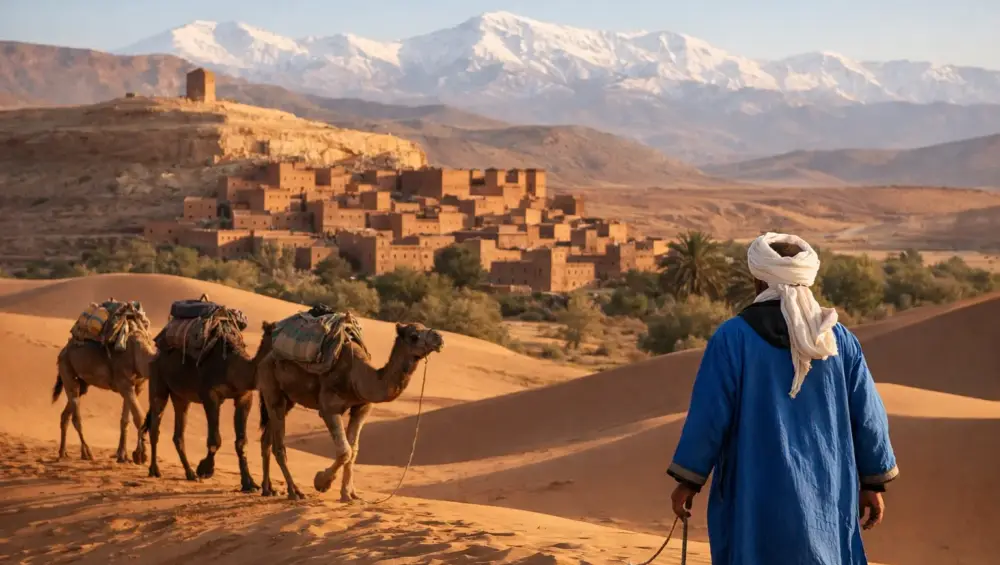
The drive traces the Ziz Valley, where palm groves appear unexpectedly beneath vast, dry escarpments. Later, the landscape becomes greener and cooler. In the cedar forests near Azrou, you may see Barbary macaques, though I encourage travellers to observe them respectfully and avoid feeding them.

An overnight break also means you arrive in Fes with energy left for the city rather than simply needing a shower and an early bed.

Day 7: Arrive in Fes with time to understand it

Fes is often described as Marrakech’s quieter cousin. I do not think that quite captures it. Fes is less performative, more layered and, in many ways, more demanding. Its medina is dense, working and historic, with neighbourhood bakeries, workshops, fountains and trading alleys that reward context.

If your schedule only allows one night, arrive early enough for a panoramic view and a relaxed evening. If you can add an eighth day, use it for a licensed local guide in the medina. This is where an explanation transforms the experience: why the tanneries are arranged as they are, how the funduqs once supported trade, and how people still live within this extraordinary old city.

Why eight days is usually the better choice

An eight-day version does not need to add another big destination. Its value is in pace. You might take an extra night in Marrakech, stay two nights around Merzouga, or break the northern drive with a night in Midelt or Ifrane. My preference for most travellers is an extra desert-region night.

That second night lets you explore beyond the camp itself. You could visit a local village, hear Gnawa music in the Merzouga area, take a gentle 4×4 route around the dunes, or simply enjoy a proper morning after sunrise rather than packing immediately. It also gives the weather a little more flexibility. Wind, rain or an unusually hot afternoon should not be allowed to dictate the entire desert experience.

For travellers who dislike long car journeys, eight days is not a luxury. It is good route design.

Practical choices that shape the journey

A private driver is particularly useful on this route because the journey is not just about getting from A to B. Timings change with roadworks, mountain weather, market days and the places where you decide to linger. A knowledgeable driver can suggest the right viewpoint, find a worthwhile roadside lunch, and help the day feel like travel rather than transport.

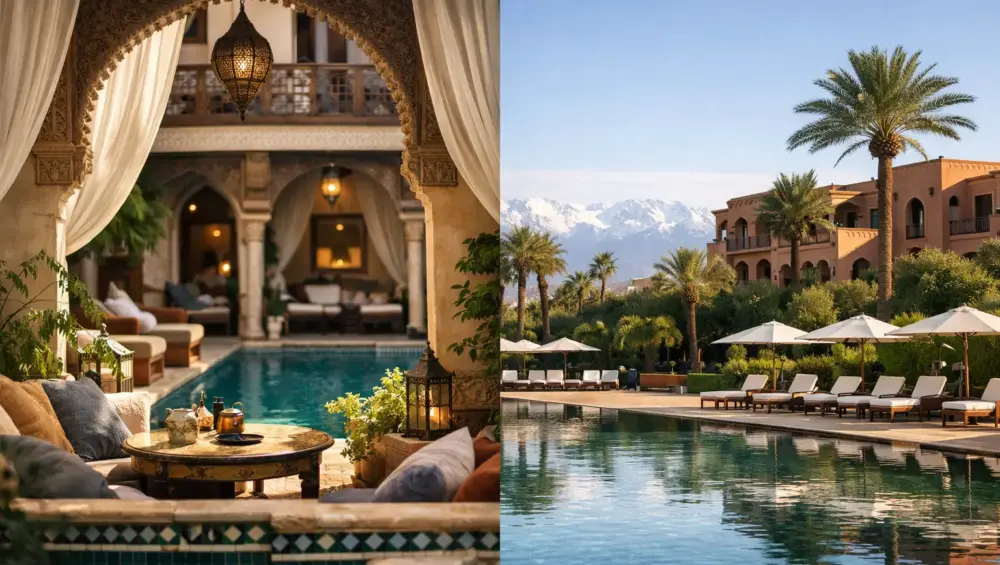
Accommodation also needs to follow the route rather than an arbitrary category. In Marrakech and Fes, a well-run riad inside or close to the medina can add real atmosphere, though access and luggage handling should be considered. In the valleys, I look for character and a setting that earns the overnight stop. In the desert, I care more about camp location, warmth in winter, service and quiet than flashy labels.

Pack for contrasts. Even when Marrakech is warm, the mountains can be cold, and desert nights between late autumn and early spring are often surprisingly chilly. Comfortable closed shoes are more useful than fashion-led sandals for gorges, medina lanes and dune walks. A light scarf is useful for sun and sand, but there is no need to arrive dressed as though you are in a costume drama, habibi.

The mistake to avoid

The common mistake is treating the desert as a detour that must be squeezed into the shortest possible timeframe. It is not. The road to the Sahara is the story: the mountain villages, fortified kasbahs, changing geology, date palms and the gradual sense of space opening around you.

When I design this route through Morocco Genie, I start by asking what kind of days you enjoy. Some travellers want every possible stop and an active desert adventure. Others want long lunches, fewer hotel changes and time to read beside a pool in Skoura. Both are excellent journeys when the pace is honest.

Leave room for the unplanned moment – a roadside stall selling fresh dates, a view that makes everyone ask the driver to stop, or a quiet cup of tea after sunset in the dunes. Those are often the details that stay with you long after the sand has left your shoes.

Morocco Itinerary 10 Days That Flows Well

Morocco Itinerary 10 Days That Flows Well

Ten days in Morocco sounds generous until you start pinning places on a map. Marrakech, Fes, the Sahara, Chefchaouen, Essaouira, the Atlas Mountains – suddenly your morocco itinerary 10 days turns into a race. I see this all the time. People arrive with a beautiful wish list and only later realise that Morocco is a country where the distances, road styles and pace of travel matter just as much as the sights themselves.

If you want those ten days to feel rich rather than rushed, the smartest approach is not to cram in everything. It is to build a route with rhythm. In Morocco, a good journey is not just about where you sleep each night. It is about how the places connect, how much road time you can genuinely enjoy, and where you allow space for Morocco to surprise you.

A Morocco itinerary 10 days travellers can enjoy

If you are visiting for the first time and want a balanced mix of cities, scenery and desert, my favourite shape for a 10-day route is Marrakech, the Atlas Mountains, Ait Ben Haddou, the Dades or Skoura area, Merzouga desert, Fes and then either a final night in Marrakech by flight or a different departure point depending on your international route.

Why this works so well is simple. It gives you contrast without constant backtracking. You get the sensory hit of Marrakech, mountain landscapes, cinematic kasbah country, the Sahara experience and the cultural depth of Fes. It also avoids one of the most common mistakes – trying to add both Chefchaouen and Essaouira into the same ten days as well. You can do it, technically, but the trip often ends up feeling like a transfer schedule with mint tea.

Days 1-2: Marrakech without rushing it

I usually suggest at least two nights in Marrakech at the start. After a flight, especially if you are arriving from long-haul routes, it helps to begin with somewhere lively but logistically easy. Marrakech is ideal for that. You can settle into a riad, get your bearings and enjoy the city properly instead of treating it as a box to tick.

On your first full day, focus on the Medina, a garden or two, and perhaps a guided visit if you enjoy context rather than wandering blind. Marrakech can be magical, but it can also be overwhelming when approached without a plan. This is one of those places where a few well-chosen hours are often better than a heroic all-day march through every souk.

Some travellers ask whether one night is enough. My honest answer is only if you are very short on time or not especially interested in cities. Most people appreciate Marrakech more when they are not trying to decode it while half-asleep.

Day 3: Atlas views and the road to kasbah country

On day three, head south across the High Atlas. This is not a throwaway transfer day. The route itself is part of the experience. The scenery changes dramatically, and if you stop well, the journey starts to feel like Morocco unfolding in layers.

I prefer including Ait Ben Haddou or a nearby kasbah area rather than pushing too far in one go. Some itineraries try to go from Marrakech straight to the desert in a single heroic drive. Yes, it can be done. No, I do not think it is a good idea for most travellers. You spend the day watching the clock, not enjoying the route.

Staying around Ait Ben Haddou, Ouarzazate, Skoura or the Dades region gives you a much better travel tempo. Which one suits you best depends on your style. Ait Ben Haddou is iconic and visually striking. Skoura feels greener and quieter. Dades gives you dramatic valley scenery. This is where private trip planning really helps because the right overnight stop depends on whether you care more about architecture, landscapes or simply minimising drive time the next day.

Days 4-5: Into the Sahara, but do it sensibly

From the south, continue towards Merzouga for your desert stay. This is usually one of the emotional high points of the trip, but expectations matter. The desert is not around the corner. It takes commitment to reach it, which is exactly why trying to squeeze it into too few days often backfires.

I recommend at least one night in the dunes area, and for many travellers, two nights is even better if the desert is a major priority. With one night, you can absolutely enjoy the camel ride or 4×4 transfer, sunset, dinner and the stillness of the dunes. With two nights, the experience becomes less performative and more personal. You actually get time to breathe.

There is also the camp question. Not everyone wants the same version of the Sahara. Some people want comfort, proper beds and a polished experience. Others care more about atmosphere and simplicity. It depends on your travel style. I always tell people the desert is memorable because of the setting, not because it is trying to be a city hotel in the sand.

Days 6-7: From Merzouga to Fes

The route from Merzouga to Fes is long, but it can be surprisingly varied if handled properly. You pass changing landscapes, palm groves, rocky plains, cedar forests and different Berber towns along the way. It is one of those days where a good driver and sensible pacing make all the difference.

Some travellers ask whether it is better to return to Marrakech instead of continuing to Fes. That depends on your flights and your interests. If you want two imperial cities and a route that feels like a true traverse of Morocco, continuing to Fes makes more sense. If your international flights work much better in and out of Marrakech and you are less interested in Fes, then a loop back south may be more practical.

Assuming you continue, give Fes at least two nights. Like Marrakech, it rewards proper time. Unlike Marrakech, it often feels denser, more layered and more cerebral. It is less about visual theatre and more about texture, craftsmanship and history.

Days 8-9: Fes with enough depth

Fes is not a city I recommend doing in a hurry. A good guide can transform it from confusing to fascinating, especially in the old Medina where navigation is not exactly self-explanatory. If Marrakech is immediate, Fes reveals itself more slowly.

Use one day for the Medina, artisan quarters and the city’s historic layers. On another day, you can either continue exploring or slow the pace down with a more relaxed morning and a few carefully chosen visits. Travellers often underestimate how tiring Morocco’s old cities can be. You do not need to prove anything by walking every lane.

This is also where I sometimes advise people to choose between depth and breadth. If your real dream is blue alleys in Chefchaouen, then you might reduce time elsewhere and head north. But adding Chefchaouen within ten days usually means a compromise somewhere else, and often that compromise is too much time in the car. Chefchaouen is lovely, but it is not always the right choice for a first trip with limited time.

Day 10: Departure day or smart extension logic

Your final day depends entirely on flight logistics. If you can fly home from Fes, excellent – that keeps the route efficient. If you need to return to Marrakech or Casablanca, then plan that movement carefully rather than pretending it is a minor detail. In Morocco, departure-day positioning is part of the itinerary, not an afterthought.

This is where many online route suggestions become unrealistic. They list beautiful places, but they do not account for how travellers actually move through the country while still enjoying themselves. Your wish is my command, habibi, but even magic works better with a map.

What to leave out of a 10-day Morocco route

The hardest part of planning a morocco itinerary 10 days is deciding what not to include. In most cases, I would not combine Marrakech, Fes, the Sahara, Chefchaouen and Essaouira all in one trip. Something has to give.

If you love coastal atmosphere and wind-down time, you might replace part of this route with Essaouira and skip Fes or the desert. If mountains and walking matter more than cities, I would shape the journey differently and give more time to the Atlas region. If this is a honeymoon or special anniversary trip, the pacing should usually be slower, with fewer hotel changes and stronger accommodation choices in key stops.

That is the truth people sometimes do not hear from generic itineraries. The best route is not the one with the longest checklist. It is the one that matches how you actually like to travel.

Why private planning changes the experience

Morocco is wonderfully rewarding, but it is not always simple to coordinate well. Driving times can be underestimated, accommodation quality varies, and the difference between a good guide, driver or desert setup and a mediocre one is enormous. A route that looks perfect on paper can feel disjointed in reality if the pacing and logistics are off.

That is why I always design around the traveller first. Some people want more markets and food. Some want scenic roads and boutique riads. Some are travelling with children and need a gentler rhythm. Others are happy with longer road days if the payoff is worth it. The route above is a strong starting point, not a rigid formula.

If you are planning ten days in Morocco, my best advice is simple: build a journey with breathing room. Morocco gives more when you stop trying to conquer it and start letting it unfold.

Morocco Desert Tour Private: Is It Worth It?

Morocco Desert Tour Private: Is It Worth It?

You can feel the difference between a rushed desert trip and a well-designed one somewhere between the High Atlas and the first proper stretch of open desert. The road stops feeling like a transfer and starts feeling like part of the experience. That is exactly why so many travellers ask me about a private Morocco desert tour rather than joining a standard group departure.

My honest answer is that private is not automatically better for everyone. But for the right traveller, it changes almost everything – the pace, the comfort, the route, the stops you make, and how the desert actually feels when you get there.

What a private Morocco desert tour really changes

Most people think private simply means having your own car and driver. That is part of it, but the real difference is control. On a shared tour, the route is built for the operator. On a private journey, the route can be built around you.

That sounds obvious, but in Morocco it matters more than people expect. Distances are real. Road days can be long. Some travellers love dramatic mountain scenery, kasbahs and slow lunches with a view. Others want to minimise driving, get to the dunes sooner and spend more time in the desert camp. Families often need regular breaks and easier pacing. Couples might want quieter riads and more atmospheric stops. A private desert journey lets those choices shape the trip rather than forcing everyone into the same mould.

It also changes the tone of the experience. Morocco can be wonderfully stimulating, but it can also be intense if your days are too packed. Private travel gives you breathing room. If you want to linger at Ait Ben Haddou, stop for tea in the Draa Valley, or skip a place that feels too crowded, you can. Your wish is my command – but only if the itinerary has been designed with enough flexibility from the start.

Private does not always mean luxury

This is one of the biggest misconceptions. A private desert tour can absolutely be comfortable and high-end, but private is really about personalisation and logistics, not just style.

I work with travellers who want beautiful boutique riads and elegant desert camps, and I also work with travellers whose priority is having a sensible route, a reliable private driver and accommodation that feels authentic and well chosen. The common thread is not extravagance. It is wanting the trip to fit them properly.

That is why I usually push people to think less about labels and more about travel style. Do you want long scenic days or shorter hops? Do you care more about dramatic landscapes, cultural stops, quality lodging or time off-grid? Are you the type to enjoy spontaneous roadside moments, or do you prefer each day to feel very structured? Those answers matter more than whether a brochure calls the trip premium.

The route matters more than the desert camp photos

Travellers often start with the camp. I understand why. The Sahara is emotional, photogenic and usually the moment they have been imagining for months. But when planning a private desert journey, the route is what makes or breaks the experience.

The classic approach is travelling between Marrakech and the Sahara through the High Atlas, Ouarzazate or Ait Ben Haddou, the Valley of the Roses, Dades or Todra, then onwards to Merzouga and the Erg Chebbi dunes. It is popular because it works. The scenery changes dramatically, and if the pacing is right, it feels like a journey rather than a box-ticking exercise.

The trouble starts when travellers try to compress too much into too little time. Yes, you can reach the desert quickly. No, that does not always mean you should. A two-night dash from Marrakech may suit some people, especially if the desert is a must and time is tight. But many travellers are happier with an extra night somewhere on the way, because it turns a hard transit into a more balanced experience.

If you are starting in Fes instead, the desert often fits differently. The drive to Merzouga is still long, but the rhythm of the trip changes. You might combine the desert with the Middle Atlas, cedar forests, market towns or a longer southbound route that eventually reconnects with Marrakech. Private travel makes these combinations much easier to shape sensibly.

Who benefits most from going private

In my experience, private desert travel makes the most sense for travellers who value pace, comfort and decision-making. Couples often choose it because they want the romance of the desert without feeling herded through the itinerary. Families appreciate the practical side – breaks when needed, space for luggage, and days built around real energy levels rather than group timing.

Small groups of friends also tend to enjoy it because they can keep the social side within their own group while still having local guidance. And then there are travellers who simply do not want to spend weeks trying to work out which desert gateway, which camp style, which route and how many nights actually make sense. Habibi, welcome to Morocco – these details are exactly where a good private plan saves you stress.

If you are highly budget-sensitive and mostly care about reaching the dunes at the lowest possible cost, a shared option may be more sensible. I would rather say that plainly than pretend private is the answer for everyone.

What to look for in a well-planned private desert trip

A good private desert journey is not just transport with hotel bookings attached. It should feel coherent.

The first thing I look at is pacing. Are the driving days realistic? Does the itinerary include stops that add something, or are they there because every route includes them? Ait Ben Haddou can be fascinating with the right timing and context. The same place can feel flat if you arrive in the middle of a rushed conveyor belt.

The second thing is accommodation logic. Not every overnight stop needs to be an event, but each one should suit the day around it. After a long drive, ease and comfort matter. Before the desert, atmosphere matters. In the desert itself, the key question is often not whether the camp looks good in photos, but whether it offers the kind of experience you want. Some travellers want stylish comfort and a polished feel. Others want something simpler and more connected to the landscape.

Then there is the driver. This is a surprisingly big factor. On a private Morocco trip, your driver shapes the rhythm of the journey more than travellers often realise. Good driving is only part of it. You want someone professional, calm, reliable and able to read the day well. In Morocco, where road travel is central to so many itineraries, that changes the whole feel of the trip.

Common mistakes travellers make

The most common mistake is underestimating distances. Morocco is not a place where every scenic point sits neatly twenty minutes apart. A route can look simple on a map and still be tiring in practice.

Another mistake is assuming one desert experience suits everyone. Merzouga is the best-known option for good reason, but how you build around it matters. Some people need a slower lead-in. Some want a one-night desert stay and more time elsewhere. Some imagine endless dune silence, then realise they also care about having a proper shower, a comfortable bed and a well-run camp.

I also see travellers focus too heavily on trying to fit every highlight into the same itinerary. Marrakech, Fes, Chefchaouen, the Sahara, the coast and the Atlas can absolutely work together on a longer trip. But if your holiday window is tighter, forcing all of it in often weakens the desert section rather than improving the trip.

Is a private Morocco desert tour worth it?

Usually, yes – if what you want is not just to see the desert, but to experience Morocco in a way that feels considered, comfortable and genuinely yours.

What you are really paying for is not privacy in the abstract. It is the ability to shape the journey around your interests, energy and priorities. It is fewer compromises on timing, route and atmosphere. It is having the freedom to stop when something catches your eye and move on when it does not.

That said, the value only appears when the trip has been designed properly. A private car on a poor itinerary is still a poor itinerary. The best private journeys feel easy because somebody has thought carefully about the moving parts before you arrive – distances, stopovers, desert timing, accommodation character and the little details that stop a good Morocco trip becoming a tiring one.

When I plan these journeys, that is the part I care about most. Not selling the idea of private for its own sake, but making sure the desert fits your wider Morocco route in a way that actually works.

If the Sahara is one of the main reasons you are coming to Morocco, give it enough space to be more than a long drive with a photo stop. The desert rewards travellers who do not rush their wish.

Private Driver Morocco Itinerary That Works

Private Driver Morocco Itinerary That Works

The best private driver Morocco itinerary is not the one with the most pins on a map. It is the one that respects Morocco’s distances, your energy, and the kind of trip you actually want to have when you are here. I see this often – travellers start with Marrakech, Fes, the Sahara, Chefchaouen and Essaouira, then try to squeeze them into eight or nine days because on paper it looks possible. In reality, that usually means too much time in the car and not enough time enjoying Morocco.

A private driver changes everything, but not because it magically makes long distances disappear. It changes the trip because it gives you flexibility, comfort, local knowledge and a far calmer way to move through the country. You are not dragging bags through stations, negotiating taxis, or trying to decode train timings when all you want is to reach your riad before dinner. But a driver works best when the itinerary itself is designed well.

What makes a good private driver Morocco itinerary

The first thing I look at is pace. Morocco rewards travellers who leave a little breathing room in the route. Marrakech deserves time because it is intense, colourful and full of contrast. Fes also needs time, but in a different way – more layered, more historic, and better appreciated when you are not rushing. The Sahara is unforgettable, but getting there is part of the experience, so the journey needs to be paced properly.

The second thing is route logic. A good itinerary should feel like a natural flow rather than a series of disconnected highlights. If you land in Marrakech and leave from Casablanca, that gives us one shape. If you fly in and out of Marrakech, that is another. Open-jaw flights often make a huge difference in Morocco because they reduce backtracking.

Then there is the question of travel style. Some people are happy with scenic drives and changing hotels every couple of nights. Others want slower mornings, long lunches, a pool in the afternoon, and fewer one-night stops. Neither is right or wrong. It depends on how you like to travel.

The biggest mistake: trying to see all of Morocco by road

Morocco looks compact until you start adding drive times properly. Marrakech to the Sahara is not a quick hop. Fes to Chefchaouen is very manageable, but Chefchaouen to Marrakech is not something I would casually drop into a short trip. Essaouira is lovely from Marrakech, but if you are already trying to fit in the desert and Fes, it may become one stop too many.

One of the most common mistakes I see is treating a private driver as a licence to overpack the itinerary. Yes, a private driver makes movement easier. No, it does not make six-hour and eight-hour driving days feel light if you do them repeatedly. The value is in comfort and sensible flexibility, not in turning the holiday into a road endurance test.

A strong 10-day private driver Morocco itinerary

If you want a classic first trip with a private driver, ten days is a very good starting point. Not perfect for everything, but enough to combine Morocco’s big contrasts without making the pace silly.

Days 1 to 3: Marrakech

Start in Marrakech and give it proper time. I would usually recommend at least three nights here. You want time for the medina, the souks, Bahia Palace, quieter corners, good food, and one slower day where you are not trying to tick boxes. Marrakech can be exhilarating, but it can also be overwhelming if you rush it.

This is also where private guiding can be useful. Not because you cannot walk the city on your own, but because Marrakech makes more sense once someone helps you read it. A good guide gives context. A bad one just walks you through shops. The difference matters.

Day 4: Atlas Mountains or Ait Ben Haddou route

From Marrakech, the route towards the Sahara usually begins with crossing the High Atlas. This is not just a transfer day. It is one of the most scenic drives in the country when the weather is clear. Depending on pace and interests, I may include Ait Ben Haddou, Ouarzazate, or a slower overnight in the Skoura area instead of forcing a longer push.

This is where private driving really earns its keep. You can stop for views, villages, kasbahs and lunch without the whole day feeling rigid.

Days 5 to 6: Sahara Desert

For a Sahara section that feels worthwhile, I strongly prefer at least two nights in the desert region, even if one is in a hotel by the dunes and one is in camp. If you race in, sleep in camp, and race out the next morning, you get the postcard but not the experience.

The road through the south has changing landscapes, small towns, date palms and stretches that feel genuinely cinematic. By the time you reach the dunes, the shift in scenery should feel earned. With two nights, there is room for sunset, sunrise, slower desert time and less pressure.

Day 7: Drive towards Fes

This is usually a longer day, so I treat it honestly. It is perfectly doable with a private driver, but it is still a travel day. The benefit is that you are comfortable, supported, and free to stop as needed. The cedar forests and Middle Atlas towns can break the route nicely, but I would not pretend it is a short journey.

Days 8 to 9: Fes

Fes deserves more than a rushed overnight. It is one of Morocco’s most rewarding cities if you are interested in history, craftsmanship and the depth of the old medina. It is also a city where a licensed local guide is particularly valuable because the medina is not intuitive and much of what makes Fes fascinating is not obvious at first glance.

I usually suggest at least two nights. Three can be even better if you like slower cultural travel.

Day 10: Departure or onward travel

From Fes, you can depart there, continue to Casablanca for an international flight, or extend north towards Chefchaouen if you have more time. This is where itinerary design matters. If you only have ten days, I would usually choose either Chefchaouen or Essaouira, not both, and often neither on a first trip if Marrakech, Fes and the Sahara are already included.

When to add Essaouira, Chefchaouen or the coast

Essaouira works beautifully if you want balance. Marrakech plus Essaouira is one of the easiest combinations in Morocco – city energy followed by sea air and a slower rhythm. It is excellent for couples and families who do not want constant moving.

Chefchaouen is attractive, photogenic and genuinely pleasant, but it sits best in a northern route. I do not usually force it into a short south-heavy itinerary just because it is famous on Instagram. If you have 12 to 14 days and are travelling one way through the country, then yes, it can fit naturally.

The Atlantic coast is often underestimated. If your idea of a good trip includes food, breezy evenings and fewer long drives, I would often build a route around Marrakech, the Atlas and Essaouira rather than trying to cram in the desert as well.

Why a private driver is worth it in Morocco

Morocco is very doable independently, but not every route is enjoyable to self-drive, and not every traveller wants to spend their holiday navigating roads, parking, medina drop-offs and logistics. A good private driver adds far more than transport. He helps the days run smoothly, adjusts timing where needed, knows how these routes actually work on the ground, and takes a great deal of friction out of the trip.

That does not mean every traveller needs a private driver for every day. Sometimes the best design is a mix – private airport transfers, rail between major cities, and a driver only for the Atlas and Sahara section. Sometimes a full journey by private vehicle makes most sense, especially for families, couples wanting comfort, or anyone covering several regions.

It depends on budget, pace, confidence and the shape of the route.

The itinerary should fit you, not the internet

This is really the whole point. A private driver Morocco itinerary should not begin with a generic list of must-sees. It should begin with you. Do you want riads in old medinas or quieter boutique stays with easier access? Do you love long scenic drives, or do you get restless after three hours in the car? Are you coming for architecture, food, desert landscapes, walking, shopping, family time, or a bit of everything?

After planning hundreds of Morocco journeys, I can say with confidence that the best itineraries are rarely the busiest ones. They are the ones with judgement behind them. They know when to slow down, when to take the scenic route, and when to leave something for next time.

If you get that right, a private driver does not just move you around Morocco. He gives the whole journey shape, ease and breathing room. And that is usually the difference between a trip that looked good on a spreadsheet and one that actually felt good while you were living it.

If you are unsure how much to include, start by cutting one stop rather than adding one more. Morocco will still be generous with you.

Private Morocco Itinerary Planner Advice

Private Morocco Itinerary Planner Advice

Private Morocco Itinerary Planner Advice

If you are looking for a private Morocco itinerary planner, the first thing I would tell you is this:

Morocco is not difficult because there is too much to see. It is difficult because the wrong route can make a brilliant country feel exhausting.

I see it all the time.

Marrakech. Fes. Chefchaouen. The Sahara. Essaouira. The Atlas Mountains.

Eight days.

“Can we do it?”

Technically? Probably.

Should you?

That is a completely different question.

A good Morocco itinerary is not a checklist of famous places. It is about pace, geography, atmosphere and understanding the people actually taking the trip.

Because a family travelling with three teenagers does not need the same Morocco as a couple who have not had dinner alone in three years.

And neither of them needs someone simply dropping hotel names onto a map.

What a private Morocco itinerary planner should actually do

My job starts before I think about hotels, drivers or riads.

I want to understand you.

Do you enjoy moving every day, or does packing another suitcase make you want to cancel the holiday?

Do you want architecture and history?

Food?

Landscapes?

Adventure?

Or do you simply want someone else to think about everything for a week?

Morocco can deliver all of those trips.

But not in the same itinerary.

For one traveller, the perfect ten days might be Marrakech, the High Atlas, Skoura, the Sahara and Fes.

For another, Marrakech, Essaouira and a quiet countryside stay with hammams, good food and absolutely no alarm clock might be perfection.

Families often need something different again: fewer hotel changes, sensible driving times and experiences that keep children interested without turning every day into organised entertainment.

That is why I never start with a fixed route.

Your wish is my command, yes.

But first, I need to understand what the wish really is.

The biggest Morocco itinerary mistake

Distances.

Morocco looks deceptively manageable on a map.

Then you meet the Atlas Mountains.

Mountain roads twist. Medinas take time. Scenic stops become long lunches. And a transfer that looked simple on Google suddenly becomes most of your day.

Marrakech to the Sahara is the classic example.

People sometimes talk about it as if the desert is sitting just outside the city.

It is not.

The journey through the High Atlas, Ait Ben Haddou country and the southern valleys is part of the experience. Done properly, you stop. You look around. You eat. You breathe.

Ideally, you break the journey overnight.

Trying to rush directly through it means missing half the reason for going.

Another common mistake is forcing northern Morocco and the deep south into a short trip.

Can Chefchaouen and the Sahara exist in the same itinerary?

Absolutely.

But if you do not have enough time, your Moroccan holiday quickly becomes a very expensive tour of the inside of a vehicle.

How I build a private Morocco itinerary

I normally start with three things:

How many days do you have?

Where are you flying in and out?

And how much moving around do you genuinely enjoy?

That last question matters more than people think.

After that, I look for contrast.

Morocco works beautifully when the rhythm changes.

Marrakech gives you colour, noise, rooftops, hidden riads and organised chaos.

Then the Atlas Mountains give you air.

Fes is intricate, layered and intense.

Then the Sahara opens everything.

Silence suddenly becomes part of the itinerary.

The strongest Morocco journeys move naturally between energy and calm.

That rhythm is often more important than adding another famous city.

The hotel with the best photos is not always the right hotel

This is another part of itinerary planning that people underestimate.

A beautiful riad can completely change how Marrakech or Fes feels.

But the most Instagrammable property is not automatically the right choice.

Where is it?

How difficult is the access?

Who is travelling?

How many stairs are there?

Is the service reliable?

Does the traveller want atmosphere or convenience?

The same applies to desert camps.

Some people want a beautiful private tent, proper bathroom, comfortable bed and polished service.

Others would happily sacrifice some luxury to feel genuinely remote.

Neither traveller is wrong.

The mistake is giving them the same experience.

Private drivers change the journey

Private transport in Morocco is not simply about having a nicer car.

It changes the rhythm of the trip.

You can stop at a viewpoint in the Atlas.

Have lunch in a valley town.

Visit a kasbah.

Change the timing because everyone is tired.

Or spend another twenty minutes somewhere simply because you like it.

Some of the best Morocco moments happen between the famous destinations.

A good route allows space for them.

For example, travelling from Marrakech towards the Sahara, I might suggest an overnight in Ouarzazate, Skoura or the Dades Valley.

The decision depends on you.

Kasbah architecture?

Palm groves?

Dramatic scenery?

Or simply the smartest place to stop so the children do not stage a rebellion in the car?

Different wish.

Different route.

Sometimes my job is to say no

This may sound strange coming from someone who designs Morocco trips.

But one of the most useful things I do is tell people what not to include.

Not every famous place belongs in every journey.

Chefchaouen is beautiful.

Essaouira is wonderful.

The Sahara can be extraordinary.

That does not mean you need all three.

If you only have five nights and your dream is the desert, adding the Atlantic coast might make the trip worse, not better.

The same applies to activities.

Cooking classes. Quad biking. Hammams. Walking tours. Surfing. Camel rides. Pottery. Food tours.

Morocco offers almost endless experiences.

But if I fill every hour of your trip, I have probably failed.

Sometimes mint tea on a terrace at five in the afternoon is the activity.

Morocco routes that usually work

I do not believe in one perfect Morocco itinerary.

But some routes naturally flow better than others.

For around one week, Marrakech, the Atlas Mountains and Essaouira create an excellent balance of city, landscape and Atlantic coast without ridiculous distances.

With more time, the journey from Marrakech through the Atlas and southern valleys to the Sahara, continuing towards Fes, is one of Morocco’s great routes.

It feels like a journey.

The landscapes change.

The architecture changes.

The atmosphere changes.

With closer to two weeks, northern Morocco, Chefchaouen or additional countryside stays can be added without turning the holiday into a race.

The key word is added.

Not squeezed.

Why personal planning matters in Morocco

Some countries are forgiving.

You arrive. You improvise. Things somehow work.

Morocco rewards a little more thought.

Distances matter.

The order of destinations matters.

Riad quality varies.

Guides are not interchangeable.

And a route that looks excellent in a document can feel completely different on day six when everyone is tired and facing another five-hour drive.

Good planning is not about controlling every moment.

It is the opposite.

Good planning creates freedom.

When the route makes sense, the hotels suit you and the logistics are handled, you can stop managing the holiday and start enjoying Morocco.

That is how I approach every journey.

Not as a template.

Not as a list of hotels.

As a puzzle.

And the most important pieces are the people actually taking the trip.

Habibi, welcome to Morocco.

Tell me your wish.

We’ll work out what you really mean.

Private Morocco Itinerary Planner Advice

Stress Free Morocco Holidays Done Right

Stress Free Morocco Holidays Done Right

Morocco becomes stressful when people try to fit too much into too little time. I see it often. Someone wants Marrakech, Fes, the Sahara, Chefchaouen, the Atlas Mountains and Essaouira in eight days, then wonders why the trip feels like a military exercise with mint tea. If you want stress free Morocco holidays, the answer is usually not more planning spreadsheets. It is better judgement, a smarter route and the right support on the ground.

Morocco is one of the most rewarding places to travel, but it is not a destination where every part joins up neatly on its own. Distances can be longer than they look. Medinas can be confusing. Hotel choice matters more than people expect. A beautiful desert camp can feel magical after the right lead-in, or exhausting after an overlong drive and a badly timed arrival. The difference is rarely luck.

What stress free Morocco holidays really look like

A smooth Morocco trip does not mean a bland one. It does not mean staying in polished bubbles and missing the real country. In fact, the opposite is usually true. The less friction in the logistics, the more space you have to enjoy the parts that make Morocco memorable – wandering through a riad courtyard in Marrakech, reaching a kasbah in the Atlas Mountains, hearing the evening call to prayer in Fes, or watching the light change over the dunes.

For me, stress free means a journey that matches your pace. It means not changing hotels every night. It means allowing proper time in places that deserve it. It means having a private driver when self-driving would add unnecessary effort. It means knowing when you need a licensed guide in a complex medina and when you are better off exploring on your own.

That last point matters. Some travellers assume more guiding is always better. I do not agree. Good planning is not about adding services everywhere. It is about putting the right help in the right place.

The biggest mistake is route design

One of the most common mistakes I see is treating Morocco like a checklist. On a map, places can look deceptively close. In reality, moving between them takes time, energy and attention. Marrakech to the Sahara is not a quick hop. Fes to Chefchaouen is manageable, but it changes the rhythm of a trip. Adding Essaouira sounds simple until it turns a relaxed journey into a series of transfers.

The route is where stress usually begins or ends.

If you have one week, I would usually rather build a strong route around Marrakech, the Atlas Mountains, the Sahara and perhaps one other stop than cram in half the country. If you have ten to twelve days, you can breathe more and connect Marrakech and Fes properly, perhaps with desert and mountain stops in between. If you have two weeks, then places like Essaouira or Chefchaouen become easier to include without forcing the pace.

It depends on your style as much as your time. Some travellers love moving every couple of days. Others want slower mornings, longer dinners and time to sit on a terrace rather than chase monuments. Neither approach is wrong, but the itinerary should reflect it honestly.

Where the right private support changes everything

Morocco is a country where private travel can make a very noticeable difference, not because luxury is the point, but because logistics are. A reliable private driver changes the whole shape of the trip. You are not working out bus timetables, negotiating every transfer or worrying about unfamiliar roads after a long flight. You can stop for a view, a coffee, a village market or lunch in a place you would never have found alone.

I especially recommend private driving for longer journeys such as Marrakech to Skoura, the Dades Valley, Merzouga or Fes. Those are not routes where most travellers want to be dealing with the mechanics themselves. The day feels calmer when someone experienced is handling the road and the timing.

Guides are equally valuable in the right places. In Fes, a good local guide can transform the medina from overwhelming to fascinating. In Marrakech, some travellers like a guide on their first day, then prefer to roam alone once they have their bearings. That balance often works very well.

Accommodation can reduce stress or create it

People tend to focus on destinations, but accommodation has a huge effect on how a Morocco holiday feels. A charming riad in the right part of the medina can be one of the great pleasures of travelling here. A poorly chosen one can mean difficult access, too much noise, confusing navigation and a constant sense of effort.

This is where local knowledge matters. Some travellers want to be deep in the old city, steps from the atmosphere. Others want easier vehicle access, especially if they are arriving late, travelling with children or simply do not want to drag luggage through winding lanes. There is no universal best choice.

The same goes for desert camps. I am a big believer in the Sahara when it fits the route and the traveller. But not every camp experience suits every person. Some people want comfort, proper bathrooms and a polished setup. Others care more about isolation and simplicity. If those expectations are not matched properly, the desert can feel disappointing when it should feel unforgettable.

Build breathing space into the journey

The easiest way to make a holiday feel stressful is to leave no margin for real life. Flights run late. A lunch stop becomes longer because the view is too good to rush. You discover that your favourite part of Essaouira is simply doing very little by the sea. Morocco rewards flexibility more than rigid minute-by-minute planning.

That does not mean being vague. It means being realistic.

I usually prefer fewer one-night stays, especially on longer routes. Two nights is often the minimum that allows a place to feel enjoyable rather than purely functional. Three nights in Marrakech at the start can work beautifully. Two nights in the Atlas Mountains can be much more restorative than a single stop squeezed between cities. Even in a fuller itinerary, one slower section changes the whole mood.

Stress free Morocco holidays for different travel styles

Couples, families and friends all travel differently, and the same route will not suit them equally. Couples often want a rhythm that mixes atmosphere with privacy – riads, scenic drives, great food, perhaps the desert, but not too much hotel-hopping. Families usually need easier pacing, practical room setups and activities that work without constant long journeys. Small groups of friends may be happy with a more energetic route, but they still benefit from smart sequencing and not wasting time on awkward transfers.

This is why I never start with hotels or package templates. I start with questions. Do you enjoy busy cities or need breaks from them? Do you want to spend hours walking through medinas, or would one strong guided visit be enough? Is the Sahara a dream, or just something you feel you ought to include? Those answers shape a trip far more than generic top-ten lists ever will.

When less Morocco is actually better Morocco

This is the part where I give the advice some people do not expect. You do not need to see everything. In fact, trying to see everything is often what stops you enjoying what you do see.

A well-designed Morocco journey has contrast. Maybe that is the intensity of Marrakech followed by the stillness of the Atlas Mountains. Maybe it is Fes and then the desert. Maybe it is culture inland and a few slower nights in Essaouira at the end. Contrast gives the trip shape. Overstuffing it flattens everything into a blur of roads, bags and check-ins.

After planning hundreds of Morocco journeys, I can tell you that the best trips are rarely the longest or the most ambitious. They are the ones where the route makes sense, the pace suits the traveller and each piece supports the next.

The value of having someone join the dots

There is a version of independent travel that sounds romantic on paper but becomes tiring in practice. Researching every riad, transfer, guide and timing yourself can work, but Morocco has a lot of moving parts, and not all of them are obvious from online research. The issue is not whether each element looks good on its own. It is whether they work together.

That is the real job. Joining the dots. Knowing when a beautiful property is too awkward for that arrival. Knowing when a route needs a mountain stop. Knowing which day should stay light after an overnight flight. Knowing when a private guide will add value and when it will just fill time.

That is how I approach trip design at Morocco Genie. Your wish is my command, yes, but good judgement comes first. Sometimes the best advice I give is what to leave out.

If you want Morocco to feel exciting rather than effortful, start by respecting the country’s pace instead of fighting it. The smoothest journeys are not the ones with the most places. They are the ones that leave room to enjoy being there.

Stress Free Travel Planning for Morocco

Stress Free Travel Planning for Morocco

You can usually spot the exact moment planning a trip to Morocco stops being exciting and starts becoming a headache.

It happens somewhere between comparing twelve riads in Marrakech, trying to work out whether the Sahara is too far for your timeframe, and wondering if you really need a guide in Fes or if that is just clever marketing.

I have seen this hundreds of times.

The problem is not Morocco. The problem is that Morocco gives you too many good options.

Marrakech. Fes. The Sahara. Chefchaouen. Essaouira. The Atlas Mountains. Imperial cities, mountain villages, Atlantic coast and desert landscapes.

Suddenly, a holiday becomes a logistical puzzle.

What stress free travel planning really means

Stress free travel planning does not mean giving up control and letting someone else decide everything for you.

It means knowing that your trip makes sense.

The route flows properly. The driving days are realistic. The accommodation suits you. And you are not spending half your holiday solving problems that could have been avoided before you arrived.

This matters in Morocco more than many first-time visitors realise.

Distances can be deceptive. A riad that looks incredible online may be perfect for a couple and completely wrong for a family with young children. A luxury desert camp can look magical in photographs, but whether you actually enjoy the experience depends on the season, your comfort expectations and how much time you have.

The best Morocco trips are rarely the ones with the longest list of destinations.

They are the ones designed around the traveller.

Start with the traveller, not the map

When I plan a Morocco journey, I do not start by asking which hotels you want.

I start with you.

How do you like to travel?

Do you enjoy long scenic road journeys or do you prefer staying somewhere for a few nights and really absorbing it?

Are you travelling for food, history, landscapes, photography, family time or simply to escape?

Do you want polished luxury, authentic simplicity, or a carefully chosen mix of both?

These questions matter far more than ticking famous places off a list.

Two people can tell me they want Marrakech, the Sahara and the Atlas Mountains.

I may design two completely different trips.

And that is exactly how it should be.

Build the route before falling in love with hotels

One of the most common Morocco planning mistakes is choosing hotels first.

You find a beautiful riad in Fes, an incredible camp in Merzouga and a photogenic kasbah in the south.

Then you try to force all three into the same trip.

Sometimes it works.

Often, it creates a holiday where every second day involves packing bags and sitting in a vehicle.

My advice is simple: build the route first.

For a first Morocco trip of around a week, fewer stops will usually give you a better experience.

With ten to fourteen days, you have much more freedom to combine cities, mountains and desert without turning the journey into a race.

Arrival and departure airports matter too. Sometimes flying into one city and leaving from another can completely transform a route and save unnecessary driving.

These are small decisions on paper.

On the ground, they make a huge difference.

Pace is personal

Some travellers love movement.

They wake up early, want to see everything and are happy arriving somewhere new every evening.

Others want slow mornings, long lunches and the occasional afternoon with absolutely nothing planned.

Neither is wrong.

But you need to be honest about which traveller you are.

If you rush Morocco, the country can feel intense.

Give it the right pace and it becomes incredibly generous.

The small details create the stress

Most travel problems are not caused by the famous attractions.

They come from the gaps between them.

Who is meeting you at the airport?

Can the vehicle actually reach your riad?

How far do you need to walk with luggage inside the medina?

Is your desert camp suitable in winter?

Does your family really want another six-hour drive after two busy days?

Would a local guide genuinely improve your day in Fes?

These are not glamorous questions.

But after years of planning Morocco journeys, I can tell you that these are often the decisions that determine how a trip actually feels.

The prettiest hotel is not always the right hotel.

The most famous destination is not always worth adding.

And the longest itinerary is definitely not always the best one.

Can you plan Morocco yourself?

Absolutely.

Some people genuinely love researching every hotel, transfer and restaurant. Morocco can be travelled independently and, for the right traveller, planning the journey is part of the fun.

But independent travel and stress free travel are not always the same thing.

The sweet spot for many of my clients is somewhere between a rigid group tour and doing absolutely everything alone.

A private journey.

Designed around them.

With the important logistics already thought through, but enough freedom for the trip to still feel like their own.

What I actually do at Morocco Genie

Morocco Genie is not about taking the same itinerary and changing the name at the top.

I listen first.

Then I build.

Sometimes my job is to add something a traveller has never considered.

Sometimes my job is to remove three places from their wish list and explain why they will enjoy the trip more without them.

That judgement comes from years of working with Morocco and seeing what works in reality, not just what looks good on a map.

“Your wish is my command” may sound playful.

But there is a serious idea behind it.

Your Morocco journey should be designed around you.

Not around a template.

My simplest Morocco planning advice

Before booking anything, choose the three experiences that matter most to you.

Not ten.

Three.

Then build the journey around them.

Be realistic about distances. Leave some breathing room. And get help with the parts where local knowledge can genuinely make a difference.

Morocco is at its best when you are experiencing it, not managing it.

The call to prayer drifting across Marrakech at dusk.

A road winding through the Atlas Mountains.

Dinner beneath the desert sky.

A riad courtyard hidden behind an ordinary medina door.

Those are the moments you remember.

Good planning simply creates more room for them.

How to Plan a Trip to Morocco

How to Plan a Trip to Morocco

The biggest mistake people make when planning Morocco is trying to do too much. They squeeze in Marrakech, Fes, the Sahara, Chefchaouen, the coast and the mountains in one week, then wonder why the whole trip feels like a race. If you are wondering how to plan a trip to Morocco properly, the real answer is not just where to go. It is how to match the country to your pace, interests and energy.

Morocco is wonderfully varied, but that variety comes with distances, changing landscapes and a lot of choice. One day you can be in a bustling medina, the next in a quiet mountain valley, and the day after on the edge of the desert. That is exactly why planning matters here. A good Morocco itinerary feels rich and exciting. A bad one feels like too many hotel check-ins and too many hours on the road.

Start with the kind of Morocco you actually want

Before you look at routes, start with yourself. Are you dreaming of romantic riads, long dinners and beautiful design? Are you travelling as a family and need an easier pace, a swimming pool and fewer one-night stops? Do you want culture and history, or scenery and space? Morocco can do all of that, but not all at once without compromise.

This is where many travellers go wrong. They plan around famous names rather than experience. Marrakech and Fes are both iconic, but they offer different moods. Marrakech is vivid, stylish, busy and full of energy. Fes is older, deeper and more intense in a cultural sense. The Sahara is unforgettable, but it takes time to reach well. The Atlas Mountains can be the perfect breather between cities, especially if you do not want your trip to feel relentlessly urban.

So the first job is simple. Decide what matters most. Not what you could do, but what you most want to feel while you are there.

How to plan a trip to Morocco around your time

Time is the backbone of the whole journey. Morocco rewards slower travel more than people expect.

If you have 5 to 7 days, keep it focused. Marrakech with the Atlas Mountains and perhaps Essaouira can work beautifully. A short trip centred on one region often feels far more satisfying than chasing a checklist across the country.

If you have 8 to 10 days, you have more room. This is when travellers often combine Marrakech, the desert and Fes, or Marrakech with the mountains and coast. It can work very well, but only if the pacing is realistic.

If you have 12 to 14 days, the country starts to open up properly. You can include the desert without rushing and still have time for cities, mountain scenery and perhaps a coastal stop. This is often the sweet spot for first-time visitors who want a balanced private journey.

More than two weeks gives you space for Morocco’s quieter pleasures – lesser-known kasbahs, scenic routes, extra nights in special places, and the luxury of not packing every morning.

Choose the right route, not the longest one

A good Morocco route is about flow. You want the journey to make geographical and emotional sense.

For a first trip, a classic southbound route often works well: Casablanca or Marrakech, then the Atlas Mountains, Ait Ben Haddou, the Dades Valley or Skoura, on to the Sahara, then north to Fes. It gives you cities, landscapes and a proper sense of the country changing around you.

If you are less interested in long road journeys, a Marrakech-focused itinerary may suit you better. Marrakech, the High Atlas, the Agafay region and Essaouira can create a very rounded trip with less time spent in the car.

Northern Morocco is another option, especially for repeat visitors or travellers who prefer a gentler pace. Tangier, Chefchaouen and Fes can work beautifully together, though Chefchaouen is often better as a short stop than a long stay unless you really want stillness.

The honest truth is that some combinations look neat on a map but feel awkward in real life. Morocco is not enormous, but road travel takes longer than many people expect. Distances are part of the experience here, not an inconvenience you can wish away. Your wish is my command – but physics still wins.

When to go depends on what you want most

Spring and autumn are generally the easiest seasons for a broad Morocco itinerary. Temperatures are more comfortable, landscapes are often at their best, and you can move between cities, mountains and desert with fewer weather extremes.

Summer can still work, but you need to be selective. Marrakech, Fes and the Sahara can be very hot. If you are travelling in July or August, the coast and the mountains become especially attractive. Essaouira, for example, often feels wonderfully fresh compared with inland cities.

Winter is underrated. Marrakech can be lovely, desert nights are cold but magical, and the light is often beautiful. The trade-off is that mountain areas can be colder than people expect, and some travellers are surprised by how chilly riads and desert camps can feel after sunset.

So there is no single perfect month. There is only the best timing for your preferred route and comfort level.

Budget for the style of trip, not just the flights

Morocco can be done on many budgets, but private tailor-made travel sits in a different category from backpacking or joining a group tour. That is not about excess. It is about comfort, coordination and using your time well.

Your budget will be shaped by accommodation level, whether you use a private driver, the season, and how many one-night stops you build in. Constant moving tends to increase costs and reduce enjoyment.

It is also worth knowing that the cheapest-looking option is not always the best value. A badly chosen riad in a noisy alley, a very long self-drive after dark, or a desert excursion squeezed into the wrong number of days can end up costing more in stress than it saves in money.

If budget matters, which it usually does, be clear about where to spend and where to ease off. Many travellers are happiest investing in the desert experience, a beautiful riad in one or two key places, and reliable transport. Not every night needs to be lavish for the overall journey to feel special.

Don’t underestimate logistics

This is the least glamorous part of planning and one of the most important. Morocco is not difficult, but it does reward good coordination.

Airport choices matter. Open-jaw flights can save a huge amount of time if you arrive in one city and leave from another. Transfers matter too, especially after a late flight. So do the practical details of medinas, where cars cannot always reach your accommodation directly.

Then there is the question of transport. Self-driving gives flexibility, but it is not for everyone. Road conditions are generally manageable, but city driving, mountain roads and long distances can be tiring. A private driver changes the feel of the trip completely. It allows you to enjoy the journey, stop where it makes sense, and avoid the mental load of navigation and parking.

Guides are another place where quality really matters. In cities such as Fes and Marrakech, a knowledgeable local guide can transform what might otherwise feel overwhelming into something fascinating and enjoyable.

Build in breathing space

One of the smartest ways to plan a better Morocco trip is to leave room for it to happen. Not every day needs a full programme.

Morocco is full of moments that do not fit neatly into an itinerary – mint tea on a terrace, a conversation with a shopkeeper, children playing in a village lane, the changing light over the dunes, the call to prayer drifting across a medina rooftop. If every day is scheduled too tightly, you miss the atmosphere that makes the country memorable.

That is why two-night stays are often far better than one-night stops. You unpack, settle in, and experience a place rather than merely passing through it.

The details that make the trip feel right

Accommodation is not just where you sleep in Morocco. It shapes the whole mood of the journey. A characterful riad in the right part of a medina can be a highlight in itself. The wrong one can mean too much noise, awkward access or a style that looks good in photographs but does not feel comfortable.

The same goes for desert camps, mountain stays and coastal hotels. What suits a honeymoon couple may not suit a family with younger children. What suits an adventurous traveller may not suit someone who values easier access and a slower rhythm.

This is where personalised planning makes such a difference. The best Morocco trips are not built from generic top-ten lists. They are built around the traveller.

If you want help with that process, Morocco Genie is built around exactly this idea – designing private journeys that fit the person, not forcing the person into a fixed route.

A final thought on planning well

The best answer to how to plan a trip to Morocco is to stop trying to see all of Morocco at once. Choose the version of the country that suits you now, give it enough time, and let the journey breathe a little. Morocco does not reward rushing. It rewards curiosity, good pacing and thoughtful choices – and when those pieces fall into place, habibi, it can be pure magic.

Why Tailor Made Morocco Holidays Work Better

Why Tailor Made Morocco Holidays Work Better

Some Morocco trips look wonderful on paper and feel exhausting in real life. Three cities in four days, a desert camp squeezed between long drives, a riad that looked charming online but turns out to be nowhere near where you want to be. This is exactly why tailor made Morocco holidays appeal to travellers who want the magic of Morocco without spending the whole trip recovering from bad planning.

Morocco rewards curiosity, but it also rewards good judgement. Distances can be longer than they seem. Two properties in the same city can offer completely different experiences. A route that suits a couple on a romantic trip may be all wrong for a family with younger children or a group of friends who want energy, food and late nights. The best journeys here are not built from a standard package. They are shaped around the people taking them.

What tailor made Morocco holidays really mean

The phrase gets used rather loosely in travel. Sometimes it means choosing from three fixed routes and swapping one hotel. That is not truly tailor-made.

Real tailor made Morocco holidays begin with you. How do you like to travel? Do you want busy medinas and beautiful riads, or more space and fewer hotel changes? Are you coming for architecture, food, hiking, photography, family time, a special birthday, or your first big trip as a couple? Do you want one night in the Sahara for the experience, or two nights because you genuinely want to slow down and enjoy it?

Those details matter more in Morocco than many travellers expect. This is a country with huge variety packed into one journey – imperial cities, Atlantic coast, mountain valleys, desert landscapes and villages where time feels gloriously unbothered by your schedule. A well-designed private trip joins these places together in a way that feels natural rather than rushed.

Why a fixed itinerary often gets Morocco wrong

Morocco is not difficult in the dramatic sense, but it is easy to misjudge. That usually happens in three areas: pace, geography and expectations.

Pace is the big one. Travellers often try to fit in Marrakech, Fes, Chefchaouen, the Sahara, the Atlas Mountains and Essaouira in one week. Technically, yes, you can. You can also spend most of that week in a car wondering why you thought this was a holiday. Good trip design is partly about what to leave out.

Geography matters too. Morocco is compact compared with some countries, but travel days still need respecting. A mountain road may be beautiful and slow. A desert transfer may be memorable, but it is still a long day. The route has to work as a real journey, not just a wish list pinned to a map.

Then there are expectations. Some people imagine the Sahara as remote silence and stars. Others imagine camel rides, stylish tents and a photographer’s dream. Both can be true, but not every camp offers the same balance of comfort, atmosphere and authenticity. The same applies to riads, guides and local experiences. Curation matters.

The real value of a personalised Morocco trip

A personalised trip is not just about luxury, although comfort can certainly be part of it. The real value is fit.

If you are celebrating something special, the trip can lean into atmosphere – beautiful riads, slower mornings, memorable meals, perhaps a hammam and a desert camp that feels romantic rather than busy. If you are travelling as a family, the route can include shorter drive times, properties with space to breathe and experiences that children actually enjoy rather than politely endure. If you are seasoned travellers who dislike anything too polished, the focus can shift towards character, food, local encounters and places that feel less obvious.

That is where tailor made Morocco holidays become far more than a transport-and-hotel arrangement. They allow the trip to reflect your energy, not somebody else’s. One traveller’s dream itinerary is another traveller’s idea of hard work.

The difference private drivers and local knowledge make

A good private driver in Morocco is not just the person taking you from A to B. On a well-run trip, they are part of the rhythm of the journey. They understand the roads, the realistic timings, where to stop, when to keep moving and how to help the day feel easy.

This is especially important in Morocco because the country changes quickly as you travel through it. One day you are in the intensity of Marrakech, the next you are winding through the High Atlas, then crossing towards desert landscapes that feel almost lunar. Done well, those transitions are part of the pleasure. Done badly, they become long logistical slogs.

Local knowledge also helps with the choices that travellers cannot easily judge from a screen. Which riad is beautifully designed but impractical for light sleepers? Which medina location sounds central but means noise and awkward access? Which desert camp has style but still feels rooted in place? These are not minor details. They shape the whole mood of a trip.

Tailor made Morocco holidays are as much about editing as adding

This is the part many people do not hear often enough: a better trip is not always a bigger trip.

Sometimes the smartest advice is to skip Chefchaouen if you only have eight or nine days and your route already includes Marrakech, Fes and the Sahara. Sometimes one night in Essaouira is enough, and sometimes it deserves three. Sometimes travellers think they want constant movement, then realise what they really want is two excellent bases and less unpacking.

The strongest itineraries are edited with confidence. They protect your time, your energy and the feeling that you are actually experiencing Morocco rather than ticking it off.

What a good tailor-made itinerary usually includes

Not every private Morocco journey should look the same, but the best ones tend to share a few qualities. They have a clear flow. They balance iconic places with breathing space. They include experiences that make sense for the traveller rather than generic add-ons.

For one couple, that might mean arriving in Casablanca, moving on to Fes for a deep cultural start, then crossing slowly towards the Sahara with meaningful overnight stops before finishing in Marrakech. For another, it could mean combining Marrakech, the Atlas Mountains and Essaouira for a shorter trip with less driving and more time to settle into each place. For a family, it may be a route with gentler pacing, child-friendly properties and less focus on relentlessly changing locations.

The point is not to create the most impressive-sounding itinerary. It is to create the one that feels right when you are actually living it.

Where travellers often waste money when planning alone

This is not always about choosing cheap over expensive. In Morocco, travellers often waste money by spending in the wrong places.

They book too many one-night stays and pay for convenience with comfort. They pick accommodation based on photos alone and miss crucial questions about accessibility, noise, room layout or service standards. They overpack the route, add domestic flights or unnecessary detours, and lose valuable holiday time in transit. Or they choose a desert experience that looks glamorous online but lacks warmth, atmosphere or proper organisation.

Spending more does not automatically create a better trip. Spending wisely does. That usually means knowing where private guiding really adds value, when a scenic transfer is worth the time, and which destinations deserve a higher accommodation budget because the experience of staying there matters more.

Why support during the trip matters more than people think

Most travellers focus on itinerary design before departure, which is understandable. But support during the journey is where a lot of stress disappears.

Morocco is wonderfully rewarding, but travel plans can still shift. A preferred guide may need replacing. Weather in the mountains can change a day’s timing. You may decide you want a restaurant recommendation, a little more flexibility, or help adjusting something on the go. Having someone who knows the country and the moving parts behind your trip is not flashy, but it is hugely valuable.

That is one reason a specialist like Morocco Genie makes such a difference. The journey is not built from a shelf of pre-set tours. It is shaped around the traveller, then coordinated with the sort of local knowledge and practical support that turns a good idea into a trip that actually works.

Who tailor made Morocco holidays suit best

They are especially well suited to travellers who want independence without isolation. People who do not want a group tour with a flag-following schedule, but also do not fancy researching every road, riad, guide and transfer themselves.

They suit couples who want something personal, families who need the journey to be realistic, and private groups who want Morocco to feel exciting rather than administratively heavy. They also suit travellers who care about authenticity but have no desire to prove anything by making life harder than it needs to be.

Morocco can be extraordinary when the trip fits the traveller. Not just impressive, but deeply enjoyable – the kind of journey where the desert feels earned, the cities make sense, the slower moments are built in, and the whole route holds together beautifully. Your wish is my command only works if someone first understands the wish properly. That, more than anything, is why a thoughtfully designed Morocco holiday tends to stay with people long after they have unpacked.

Visa Requirements for UK Residents

Unlocking the Magic of Morocco: Visa Requirements for UK Residents

Unlocking the Magic of Morocco: Visa Requirements for UK Residents

Visa Requirements for UK Residents

If you’re a UK resident seeking an enchanting escape to the vibrant and mystical land of Morocco, you’re in for a treat! Morocco, often associated with the allure of Arabian nights and genies, is a place of incredible diversity, from the bustling markets of Marrakech to the serene Saharan dunes. However, before you embark on your magical Moroccan journey, you may be wondering about the visa requirements for UK residents. Fret not, for we are here to unveil the secrets of Moroccan travel!


Discovering Morocco – A Treasure Trove of Experiences

Morocco, located in the northwest corner of Africa, is a country that transcends time and space. Its blend of ancient traditions and modern influences is sure to captivate the hearts of travelers. From the grandeur of the Atlas Mountains to the charm of the coastal towns, Morocco offers a multitude of experiences, such as:

marrakesh red city

Marrakech, the Red City

Lose yourself in the medina's maze, explore the historic palaces, and get mesmerized by the vibrant souks. The Jamaa el Fna square, with its street performers and food stalls, is an adventure in itself.

sahara desert morocco

The Sahara Desert

Embark on a desert safari and spend a night under a sea of stars in a Berber camp. The silence and vastness of the Sahara are truly awe-inspiring.

Fes the Cultural Hub

Fes, the Cultural Hub

Dive deep into Moroccan history in the city of Fes, known for its labyrinthine medina, madrasas, and ancient tanneries.

Chefchaouen the Blue Pearl

Chefchaouen, the Blue Pearl

Find tranquility in the azure alleyways of Chefchaouen, a town nestled in the Rif Mountains.

morocco coast beach

Coastal Delights

Relax on the sunny beaches of Agadir or explore the coastal charm of Essaouira, known for its historic medina and windswept ramparts.

visa uk for morocco

Visa Requirements for UK Residents

The good news is that Morocco, known for its hospitality and openness to tourists, doesn’t require a visa for UK residents staying for up to 90 days. Here are a few things to keep in mind:

Ensure your passport is valid for at least six months from your planned entry into Morocco.

Make sure to receive an entry stamp upon arrival and an exit stamp upon departure. These are essential for a hassle-free experience.

If you plan to stay in Morocco for more than 90 days, you can request an extension from the nearest police station.

While visa requirements may change, it’s always a good idea to check the latest information with the Moroccan embassy or consulate in the UK before your trip.

The Magic of Morocco

Awaits You

Morocco is a land of breathtaking landscapes, intricate architecture, delectable cuisine, and a warm, welcoming culture. Whether you dream of traversing the ancient medinas or riding camels into the endless dunes of the Sahara, Morocco has something extraordinary to offer every traveler.

So, dear UK residents, if you’ve been contemplating your Moroccan adventure, rest assured that the magic of Morocco is within your grasp. With visa requirements for UK residents being quite reasonable, it’s time to unlock the treasure chest of Morocco and uncover the enchanting secrets hidden within this captivating country. Your genie may not grant you three wishes, but Morocco will grant you an abundance of unforgettable memories!