The first thing I tell travellers planning a desert night is this: the Sahara is not a hotel with sand around it. A good Sahara camp experience review should begin with the journey, the landscape and the small practical details that determine whether the night feels extraordinary or simply inconvenient.
I have helped plan many private Morocco journeys that include the desert, and the strongest memories are rarely the obvious ones. It might be the silence after the generator switches off, the startling cold of an early morning outside the tent, or a child spotting the first line of dunes from the road. The camp matters greatly, of course. But choosing the right desert area, route and level of comfort matters just as much.
What a Sahara camp experience really feels like
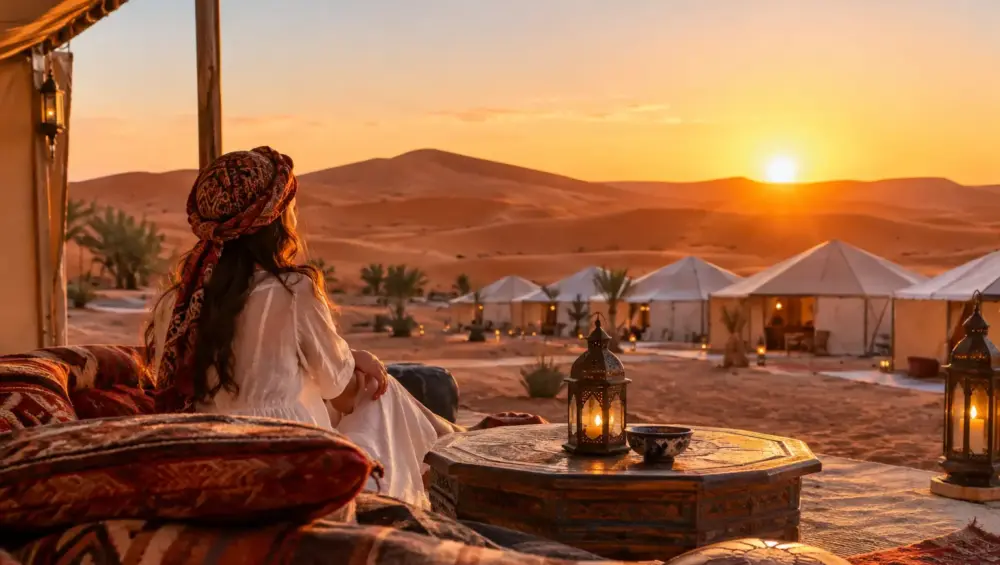
Most travellers visiting Morocco’s Sahara stay near Erg Chebbi, the great dune field close to Merzouga. These are the classic, tall orange dunes many people imagine when they picture Morocco. You generally arrive at the edge of the sand in the late afternoon, transfer by 4×4 or camel depending on the camp and preference, and settle in before sunset.
That arrival has real theatre to it. The paved road, villages and palms fall away, then the ground becomes soft and sculpted. Even people who are not especially interested in photographs tend to reach for their camera. Yet the best moment is often later, when the activity subsides and you can walk a short distance from camp with no agenda at all.
After sunset, expect dinner in a dining tent or open courtyard, usually with Moroccan dishes prepared on site. There may be music around a fire. Some travellers enjoy this immensely; others, especially couples seeking a quieter evening, prefer a camp where music is gentle and finishes early. This is worth discussing before booking rather than hoping for the right atmosphere on the night.
The following morning starts early if you want sunrise over the dunes. It is not compulsory, but I think it is one of the few early starts in Morocco that consistently earns its place. The colour changes quickly, from cool grey to peach and gold, and the tracks from the previous evening are often smoothed by the wind.
My Sahara camp experience review: comfort versus character
“Luxury camp” is a useful description, but it can mean very different things in practice. At its best, it means a spacious private tent, proper bedding, an en-suite bathroom, hot water, attentive hosts and enough distance between tents to feel private. At a more basic level, it may mean attractive furnishings and a comfortable bed, while facilities or power are more limited.
Neither is automatically better. A family with younger children may value an en-suite tent, reliable lighting and an easy 4×4 transfer above everything else. A couple celebrating something special may want a smaller camp with fewer tents and a private dune walk. Friends travelling together may happily trade some polish for a more remote setting and a stronger sense of being away from the world.
I would not advise choosing solely from polished tent photographs. Ask what is included in the tent itself, whether bathrooms are private, how far apart the tents are, whether electricity runs overnight and how guests reach the camp. These are not glamorous questions, but they shape the actual experience.
Also, remember that a desert camp is still in the desert. Fine sand finds its way into shoes, bags and occasionally your tea. Wi-Fi may be weak or absent. Temperatures can swing dramatically between day and night. That is part of the point, provided the camp has been selected with your expectations in mind.
The camel ride question
Camel rides are iconic, and many travellers enjoy them as part of the arrival. They are not, however, the only authentic way to experience the dunes, nor are they ideal for everyone. A ride can feel uncomfortable after a while, particularly for anyone with back, hip or mobility concerns. Young children may be happier in a 4×4, while keen photographers might prefer to arrive by vehicle and walk freely at sunset.
A thoughtful itinerary gives you the choice. You might take a short camel ride before sunset, then return by 4×4, rather than treating it as an endurance test. Habibi, there is no prize for being saddle-sore at dinner.
The desert you choose changes the whole experience
Erg Chebbi is usually the practical choice for a first Morocco journey. Its dunes are spectacular, access is straightforward and it combines well with routes through the High Atlas, Ait Ben Haddou, Skoura, the Dades Valley and Fes. It also offers the broadest choice of camps, which is useful when matching style, privacy and family needs.
Erg Chigaga, farther south-west, is a different proposition. Reaching it normally involves a longer off-road transfer from the M’Hamid area. The reward is a wilder, more remote feeling and fewer signs of development around the dunes. For travellers with enough time, a sense of adventure and no wish to rush, it can be deeply rewarding.
The trade-off is simple: Chigaga asks more of the itinerary. It is less suitable if you have only one desert night squeezed between long driving days, or if anyone in the party dislikes bumpy off-road travel. I would rather recommend a very good Erg Chebbi experience than send someone to a more remote desert that does not suit their pace.
The part most reviews skip: getting there
A Sahara camp is often sold as a single magical night. In reality, it sits at the end of a substantial journey. From Marrakech, reaching the Merzouga area generally requires a full day of scenic driving, often with stops in the Atlas Mountains and southern valleys. From Fes, it is also a long but varied drive through cedar forests, Midelt and the Ziz Valley.
That does not make it a bad idea. It simply means the route deserves proper design. Trying to leave Marrakech late, race to the dunes and arrive exhausted after dark is not my idea of a memorable desert experience. Breaking the journey with a well-chosen overnight stop can transform the rhythm of the trip.
For many private journeys, two nights around the desert are ideal. One night is enough to see the dunes and sleep in camp. Two nights let you arrive without rushing, explore the local area, meet a Gnawa musician in Khamlia if that interests you, visit a date-filled valley, or simply enjoy a slower morning in the sand. It depends on how much time you have and whether the desert is a highlight or one chapter in a wider Morocco holiday.
What to pack for one night in the dunes
You do not need expedition equipment, but a few choices make a noticeable difference. Pack a small overnight bag rather than relying on a large suitcase for the camp transfer. Bring a warm layer even in warmer months, closed shoes for walking on sand, sunglasses and lip balm. A head torch is useful, though many camps provide lighting.
In winter, I would add a warm hat and proper layers. Desert nights can feel surprisingly sharp once the sun disappears. In summer, light breathable clothing, sun protection and realistic expectations about afternoon heat are more relevant. The desert can be beautiful year-round, but the best camp choice and daily timing should reflect the season.
Who will love a Sahara camp, and who may not
The desert works beautifully for travellers who enjoy nature, changing landscapes and a little contrast to Morocco’s busy cities. After Marrakech or Fes, the open space can feel restorative. It is especially good for families when the driving is sensibly paced, and for couples who want an experience that feels personal rather than performative.
It may not suit travellers who strongly dislike long drives, need every modern convenience close at hand, or have only a very short Morocco itinerary. There is no shame in choosing the Atlas Mountains, Essaouira or a few extra nights in a riad instead. A tailor-made journey should not collect famous places like stamps.
When I plan a desert section through Morocco Genie, I start with the question behind the request: do you want huge dunes, a romantic night, a family adventure, quiet remoteness, or simply to understand what the Sahara feels like? The answer guides everything from the route to the camp itself.
If the desert is calling you, give it enough time to arrive with your shoulders lowered and your mobile phone forgotten. Then step beyond the last tent after dark, look up, and let Morocco do the rest.