The question of what to wear in Morocco is less about following a strict dress code and more about reading the place you are in. A linen shirt that feels perfect in Essaouira may leave you chilly by sunset. The same trainers that work brilliantly in Marrakech can be miserable on a damp Fes alleyway or a rocky Atlas trail. Morocco rewards travellers who pack for contrast.
I usually encourage people to aim for smart-casual, breathable and adaptable. You do not need to disguise yourself or buy a new holiday wardrobe. You simply want clothes that let you feel comfortable, move easily and show a little awareness of the local setting. Habibi, that is a much easier balance than it sounds.
What to wear in Morocco: the simple rule
In Morocco’s larger cities and beach towns, you will see a broad range of clothing, from very traditional to distinctly modern. Visitors are not expected to dress like locals. Still, outfits that offer a little coverage tend to feel more comfortable, particularly when walking through medinas, visiting smaller towns or entering religious and family-oriented spaces.
For most travellers, loose trousers, midi or maxi dresses, skirts below the knee, T-shirts, shirts and light blouses are ideal. Sleeves are not compulsory everywhere, but I find a shoulder-covering layer useful for both comfort and sun protection. Men will be comfortable in T-shirts or shirts with trousers, chinos or longer shorts in relaxed coastal areas. Very short shorts, crop tops and beachwear belong at the pool or beach rather than in the medina.
This is not about being overly cautious. It is about avoiding the constant feeling that your clothing is working against you. A relaxed linen overshirt or a light scarf can make an outfit suitable for a rooftop lunch, a guided walk through Fes and a cooler evening meal without any fuss.
Pack for four climates, not one holiday
Morocco looks compact on a map, but its landscapes create surprisingly different conditions. A private journey might begin in warm Marrakech, cross the high Atlas where the air is cooler, reach the Sahara with sharp temperature changes, then end on the Atlantic coast under a persistent breeze. Packing only for the forecast in your arrival city is one of the common mistakes I see.
Marrakech, Fes and the imperial cities
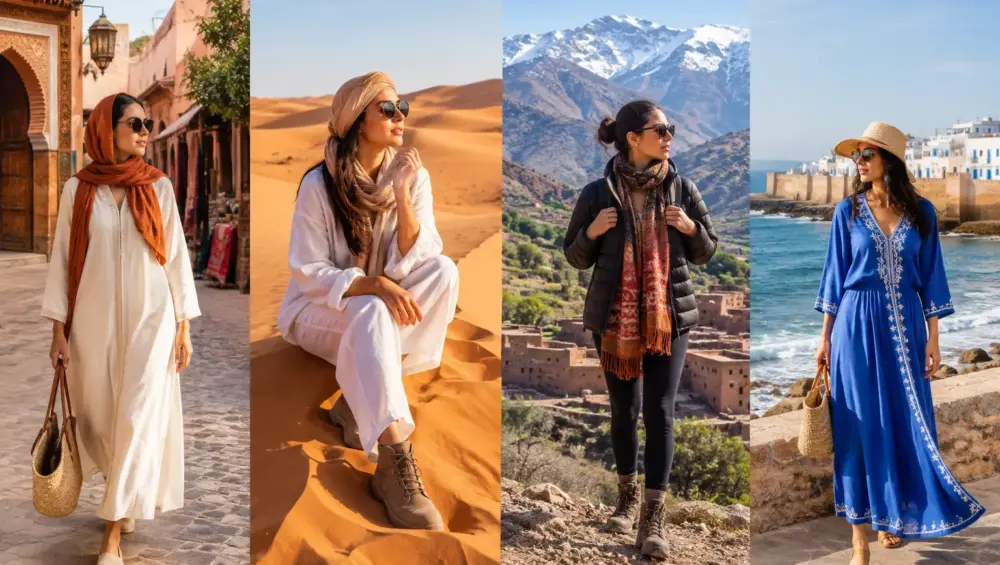
Marrakech can be hot and dry for much of the year, especially from late spring into early autumn. Natural fabrics such as cotton and linen are your friends, but choose pieces that are not too sheer. The sun is strong, the medina streets can be dusty, and air-conditioned restaurants can feel distinctly cool after a scorching afternoon.
Fes is often cooler than visitors expect in winter, and its hilly lanes make supportive shoes worthwhile. For a full day with a local guide, I would choose comfortable trainers or cushioned closed shoes over fashion-first sandals. The medinas are beautiful, but uneven paving and steps are part of the experience.
In both cities, keep one slightly smarter outfit for an elegant riad dinner or a special restaurant. Morocco has a natural sense of occasion. You need not be formal, but a crumpled beach cover-up can feel out of place when the setting is special.
The Sahara Desert
The desert is not permanently hot. During the day, particularly between late spring and early autumn, loose long sleeves and trousers protect your skin from the sun and sand better than tiny tops and shorts. In winter, early mornings and evenings can be properly cold, even after a warm afternoon.
A light scarf is one of the most useful things you can bring. It can shade your neck, protect your face during a windy moment, add warmth at sunset and cover your shoulders if desired. You do not need to arrive with a dramatic desert outfit bought specifically for photographs. In fact, simple neutral layers and shoes you already trust are usually more practical.
For a camel ride, avoid loose sandals that can rub or slip off. Closed shoes or secure sandals work better. I also suggest trousers or longer shorts that you can sit comfortably in. The goal is to enjoy the dunes, not spend the ride adjusting your clothes.
Atlas Mountains and northern Morocco
The Atlas Mountains demand layers in every season. In summer, the sun can be powerful, but shaded valleys and higher elevations are cooler. From autumn through spring, a warm fleece or knit, a lightweight waterproof layer and proper walking shoes can make a huge difference.
If your route includes Imlil, the Ourika Valley or a mountain kasbah, do not assume your city wardrobe will cover it. You may only be outside for a short walk, but mountain paths are not the place for flimsy sandals. For longer guided hikes, I would pack walking shoes with grip, breathable socks and trousers that allow a generous stride.
Chefchaouen and the Rif region can also be cooler and wetter than Marrakech, especially in winter. A compact rain jacket earns its place in the suitcase here.
Essaouira and the Atlantic coast
Essaouira has a charming habit of making a warm forecast feel cooler than expected. The Atlantic wind is part of its personality, and evenings often call for a jumper, cardigan or light jacket even in summer. A flowing dress can look wonderful there, but secure it with a layer if you plan to stroll the ramparts rather than star in an unplanned wind tunnel.
Beachwear is perfectly normal on the beach and at your accommodation. Once you head into town for lunch, shopping or sightseeing, throw on a cover-up, shirt or loose dress.
The small things that make a big difference
I would rather travellers save suitcase space on unnecessary outfits and bring a few useful accessories. Morocco is a place where practical details pay off.
- A wide-brimmed hat or cap protects you far better than relying on sunglasses alone.
- Sunglasses and high-factor sunscreen are essential, particularly in the desert and mountains.
- A lightweight scarf is useful for sun, wind, warmth and occasional extra coverage.
- Comfortable footwear matters more than another pair of evening shoes. Bring one pair for walking and one lighter alternative.
- A small cross-body bag with a secure closure is easier to manage in busy medinas than an open tote.
One extra point on colours: white and pale linen look lovely, but Morocco’s dust, orange earth and bustling food stalls are real life. Mid-tones, prints and washable fabrics are forgiving choices for days on the road.
Dressing for mosques, hammams and special settings
Most travellers will admire historic mosques from outside, as access rules vary and many are not open to non-Muslim visitors. If you are visiting a religious site that does welcome visitors, dress conservatively and follow the guidance on arrival. Having shoulders and knees covered is a sensible default.
For a traditional hammam, ask your accommodation or guide what to expect. Local hammams and spa-style hammams can be very different experiences. Do not assume you need a particular outfit before you know the setting. A swimsuit may be appropriate at a hotel spa, while a more local experience comes with its own customs and practicalities.
For a celebratory dinner, a cooking class in a family home or an evening of music, wear something that makes you feel good but allows you to sit comfortably. Morocco is generous with tea, meals and conversation. Tight, fussy clothing rarely improves any of them.
What I would pack for a week or two
Rather than packing a separate outfit for every day, build around pieces that layer and can be reworn. Two or three breathable tops, a couple of long-sleeve options, two pairs of comfortable trousers or skirts, one smarter outfit, a warm layer, a light outer layer and reliable shoes will take most people a long way. Add swimwear if your riad or hotel has a pool, and a compact laundry bag for dusty items after the desert.
If you are travelling between November and March, increase the warmth rather than simply adding more clothes. A light down jacket or warmer coat can be the difference between enjoying an evening terrace and retreating indoors early. In July and August, prioritise airy fabrics, shade and hydration, while still carrying a layer for coastal or mountain stops.
The best outfits in Morocco are not the ones that look as though they were assembled for a social media shoot. They are the ones that let you accept an unexpected invitation for mint tea, climb a rooftop for sunset, wander another hour through the souk and feel at ease doing it. When I design a journey, I always consider those shifts in climate and setting – because the right clothes leave you free to enjoy the moments that were not on the timetable.