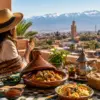
A good Morocco culinary itinerary should not be a relay race between cooking classes. The meals I remember most are often the unplanned ones: a bowl of bissara eaten standing at a Fes counter, grilled sardines arriving with bread and cumin in Essaouira, or a family-style lunch in the Atlas after a morning walk. Morocco’s food is generous, regional and deeply tied to daily life. To taste it properly, leave room for it to happen.
I usually plan food-focused journeys around contrasts rather than a long checklist of famous dishes. Marrakech brings energy and theatre; Fes rewards curiosity; the Atlantic coast is at its best when the fish is nearly still in the sea; the mountains and desert offer slower, more elemental cooking. The route below works particularly well for first-time visitors who want Morocco’s big flavours without spending every day in a car or every meal behind a camera.
Start in Marrakech, but eat beyond the square
Give Marrakech three nights. It is tempting to fill the days with palaces, souks and rooftop restaurants, but the city deserves a little food rhythm of its own. On your first morning, start simply: msemen or baghrir, olive oil, amlou, fresh orange juice and mint tea. A proper Moroccan breakfast can be deceptively filling, so I would not schedule a huge tasting lunch immediately afterwards.
The useful culinary lesson in Marrakech is ingredients. A private guide can take you through the less obvious corners of a neighbourhood market and explain why preserved lemons, ras el hanout, smen and different olives are used as they are. This is more valuable than being marched through stalls and told that everything is “very old”. Ask about seasonality too. Artichokes, peas, broad beans and citrus have their moment; tomatoes do not taste identical all year simply because a menu says salad.
A cooking session here can be worthwhile, especially if it is held in a home or a small, genuinely hands-on kitchen. I suggest doing it on day two, once you have seen the market and recognise the ingredients. Choose one that includes shopping and preparation, not only a polished final plate. You will understand why a tagine is not merely a clay pot, and why cooking slowly does not mean leaving it unattended for six hours.
In the evening, mix a considered restaurant meal with ordinary street food. Around Jemaa el-Fna, the atmosphere is remarkable, but not every stall is equally memorable. I prefer to treat the square as a place for an evening walk, juice or snack, then seek dinner where the cooking has a clearer point of view. Your driver or guide can help with current local favourites, because food addresses change faster than guidebooks admit.
Take the mountain route for bread, olives and Berber cooking
From Marrakech, spend one or two nights in the High Atlas rather than driving straight towards the desert. This is where a culinary itinerary becomes more than city dining. Village kitchens often rely on what is nearby: walnuts, olives, seasonal vegetables, local honey, fresh bread and fragrant herbs. Meals are straightforward, but that is their strength.
A short walk before lunch makes this part of the route feel earned. You might see communal bread ovens, terraced fields or women preparing a meal for a gathering, though these are working communities, not a stage set. I always encourage travellers to approach any home meal with humility. It should be arranged through trusted local people, with fair payment and clear expectations, rather than turning up hoping someone will invite you inside.
Mountain tagines can be vegetable-led and satisfyingly rich without being heavy. You may find chicken with preserved lemon and olives, or a slow-cooked lamb dish for a special occasion. The bread matters as much as the centrepiece. Moroccan meals are often shared with bread, and learning the small etiquette around it – using the right hand, taking modest portions, following your host’s lead – makes the table feel less intimidating.
Let the road to the Sahara be part of the meal
The drive from the Atlas towards Skoura, the Dades Valley and the desert is long, so it needs intelligent pacing. I would not present it as a food tour of roadside cafés. Some stops are functional, and that is fine. The pleasure lies in stopping for dates, tea and seasonal fruit, then arriving somewhere with enough time to enjoy dinner unhurriedly.
Skoura or the Dades Valley makes a sensible overnight pause. The cooking here often leans into produce from the oases: dates, almonds, figs, pomegranates when in season and vegetables grown against a dramatic, dry landscape. A date-and-almond dessert after dinner may sound modest, but it makes more sense here than an elaborate imported pudding ever could.
In the desert, keep expectations realistic. A camp meal can be atmospheric and generous, but it is not automatically the best meal of the trip. Logistics are demanding, ingredients travel a long way and wind has no respect for a carefully arranged table. What the desert does offer is the rare pleasure of eating slowly after sunset, with fewer distractions than usual. If you enjoy cooking, ask whether you can help prepare bread in the sand or tea over the fire, rather than assuming every camp offers the same experience.
Fes is where a Morocco culinary itinerary becomes more precise
After the desert, I would allow at least two full nights in Fes. The medina can feel intense, and trying to conquer it in one day is a mistake. Food is one of the best ways to understand its order: the spice merchants, coppersmiths, bakers, sweet shops and produce sellers each occupy their own small territory.
Fes is a good place to try dishes with a more refined, layered character. Think of a chicken pastilla, where crisp pastry, savoury filling, cinnamon and sugar somehow agree with each other; or a carefully made couscous, traditionally associated with Friday family lunches. Do not dismiss sweet-and-savoury combinations too quickly. They are part of Morocco’s culinary history, influenced by Amazigh, Arab, Andalusian and Jewish traditions, and a good version is balanced rather than sugary.
For me, the real pleasure of Fes is not chasing the most photographed pastry. It is taking time for small encounters: a glass of tea while a shopkeeper explains a spice blend, a stop at a bakery at the right hour, or a lunch in a quiet courtyard after the medina’s noise. A licensed local guide is particularly useful here, not because you cannot find food alone, but because the medina’s layers become much easier to read with context.
Finish on the Atlantic, where simplicity wins
If your schedule allows, fly or travel onwards to Essaouira for two nights. It is a gentle landing after Fes and the desert, and it gives the itinerary a completely different final flavour. The best fish here is often the least complicated: sardines, sea bream, calamari or prawns grilled with salt, cumin, lemon and a little charm from the person tending the coals.
The fishing port is lively, but choose carefully and keep your expectations grounded. The best experience is not always the busiest-looking counter. Freshness, clean preparation and sensible timing matter more than theatrical displays. I also like Essaouira for its argan oil, which can appear at breakfast or alongside amlou, a nutty spread traditionally made with almonds, argan oil and honey.
This is the moment to slow down. Walk the ramparts, have a long lunch, and avoid treating every plate as a research assignment. After a week or more of tagines, couscous and generous bread baskets, a grilled fish lunch can feel like a reset.
Plan for appetite, not just attractions
The common mistake with food-led Morocco trips is overbooking. A cooking class, market tour, tasting menu and elaborate dinner on the same day will blur together. I prefer one food-centred experience a day, with space for ordinary breakfasts, tea stops and the meal that appears because your driver knows a small place on a quiet road.
Dietary needs can usually be accommodated with advance planning, but they should be discussed honestly. Vegetarian travellers often do well, although protein variety may need attention. Vegan, gluten-free and severe allergy requirements need more careful coordination, especially in smaller towns where kitchens are family-run and cross-contamination is harder to control. I would never rely on a vague note in a booking when clear communication can be arranged in advance.
The same goes for pace. Some travellers want the ritual of a long lunch; others would rather eat lightly and spend the afternoon walking. Neither is more authentic. When I design a route through Morocco Genie, I start with that question because the best food itinerary is not the one with the most dishes. It is the one that leaves you hungry at the right moments, curious about the next region, and relaxed enough to accept the extra glass of tea when it is offered. Your wish is my command, habibi – but make it a wish with room to linger.