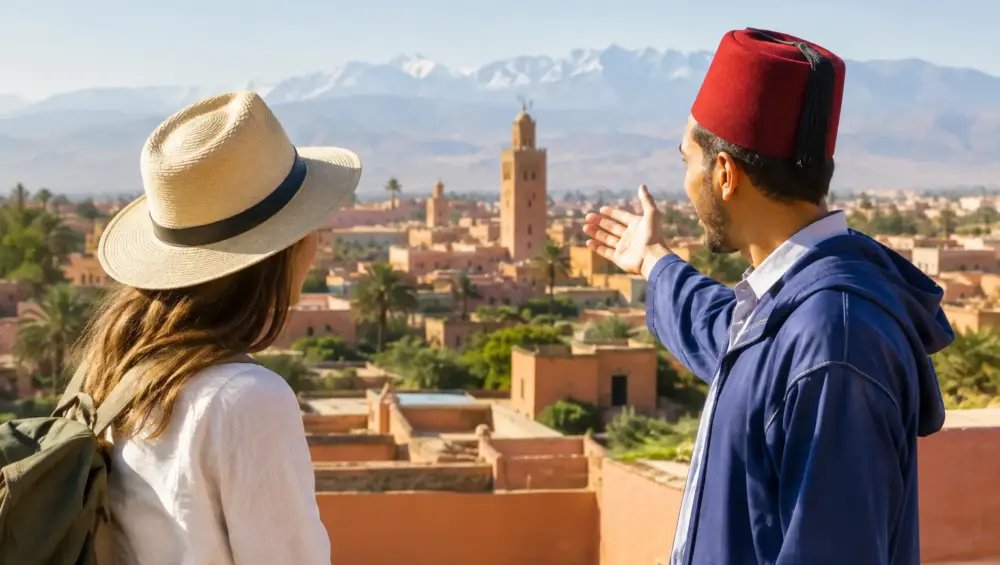
A guide can transform a morning in Fes from a confusing walk through narrow lanes into a story you can actually follow. But the wrong guide can leave you feeling hurried, over-informed, under-inspired, or gently steered towards shops you never planned to visit. That is why knowing how to book Morocco guides is less about finding the first available person and more about matching the right local expert to the place, your interests and the way you like to travel.
I plan private Morocco journeys for people who want the colour and spontaneity of Morocco without spending their holiday negotiating every detail. My honest view: you do not need a guide every day. You do need one in the places where context, orientation and good judgement make a real difference.
Start by deciding where a guide adds value
Morocco is not one experience. A guide who is brilliant in Marrakech may not be the right person for a day in the High Atlas, and a desert host is not necessarily a cultural guide for Fes.
For first-time visitors, I usually recommend a private guide in Marrakech and Fes. Both medinas are fascinating, historic and full of life, but they are also dense, busy and easy to experience only at surface level. A good guide helps you understand the rhythm of the neighbourhoods, the crafts, the architecture and the social customs. Just as importantly, they help you avoid wasting half a day looking for a place you have already walked past three times.
In the Atlas Mountains, it depends on your plans. If you are taking scenic roads, stopping at villages and enjoying a relaxed lunch, an experienced private driver and a well-planned route may be enough. If you want to walk between villages, learn about Amazigh life, or tackle a proper hike, use a mountain guide who knows the terrain and can set a pace that suits your group.
For the Sahara, think carefully about what you mean by a guide. Your driver may coordinate the journey to the desert and your camp team may lead the local experience. That can work beautifully. If your priority is geology, wildlife, photography, nomadic culture or longer walks away from the usual dune routes, say so early. Those interests call for more than a standard sunset camel ride.
Cities such as Essaouira and Chefchaouen are generally easier to explore independently, especially if you enjoy wandering. A short guided walk can still be worthwhile if you are curious about history, food or local life, but it is not mandatory simply because it is offered.
Book Morocco guides for a purpose, not a checklist
The best starting point is a simple question: what do you want to come away understanding?
Some travellers want the big historical picture: dynasties, architecture, old trading routes and the story behind the medina. Others care more about food, design, photography, Jewish heritage, gardens, crafts or the everyday details that do not make it into guidebooks. Families may need someone who can keep teenagers engaged without turning the day into a school lesson. A couple on a slower holiday may prefer a two- or three-hour orientation, then time alone for lunch and exploring.
Tell whoever is arranging your guide what you actively do not want as well. If you dislike shopping stops, say it plainly. If you enjoy artisan workshops but do not want pressure to buy, that is a useful distinction. If you have limited mobility, a pushchair, dietary requirements, a deep interest in textiles or a strong aversion to early starts, these details affect who is suitable and how the day should run.
A good brief does not need to be formal. Something as simple as, “We love food and architecture, have one curious ten-year-old, want an unhurried morning in Fes and no shopping pressure,” gives me far more to work with than, “Please book a guide.”
Check credentials, language and local fit
When you book independently, ask whether the person is an officially licensed guide for the city or region where they will guide you. Morocco has a recognised guiding system, and a licensed local guide is generally the sensible choice for cultural touring in major cities and key historic sites. You are not being difficult by asking – you are making sure the person leading your day is qualified for the work.
Language deserves more attention than travellers often give it. “English-speaking” can cover a wide range. If nuanced conversation matters to you, ask for a guide who is comfortable discussing your particular interests in English, rather than someone who can deliver a memorised overview. For French, Spanish, German, Italian and other languages, availability can be more limited in certain places, particularly during busy periods, so book early.
Then consider personality. Guides are not audio guides with legs. You will spend hours together, often in close quarters and busy surroundings. Some are energetic storytellers; others are calm, academic, funny, practical or excellent with children. Neither style is universally better. The fit matters.
When I arrange guides through trusted local partners, I look beyond availability. I consider whether a traveller wants a lively first introduction to Marrakech, a thoughtful architecture-focused walk through Fes, or a gentle family-friendly pace with frequent rests. That is where planning becomes personal rather than transactional.
Agree the shape of the day before confirming
A vague booking creates vague expectations. Before you confirm, establish the meeting point, start time, approximate duration, language, planned areas and what is included in the guide’s role.
In Marrakech, for example, a guide can meet you at your riad and lead you through the medina, but a vehicle cannot always collect you from the door. In Fes, the old city has gradients and uneven surfaces that change the pace considerably. In the Atlas, driving times can look short on a map but take longer because mountain roads are winding and stops are part of the pleasure.
Ask whether the guide will tailor the route as the day develops. The answer should not be a rigid yes to everything. A professional guide may need to explain that some landmarks are closed, a particular route is impractical at midday, or that fitting six major sights into three hours will make the experience exhausting. Good advice sometimes includes a polite no.
It is also sensible to clarify shopping. Morocco’s artisan traditions are genuinely worth seeing, and I often recommend visiting a working workshop or specialist craft space when it connects to a traveller’s interests. The difference is whether the stop feels relevant and unpressured. Be clear that you welcome cultural encounters, not a sales itinerary in disguise.
Do not confuse a private driver with a private guide
This is one of the most common planning misunderstandings. A private driver is invaluable for long-distance travel, logistics, comfort and local practical knowledge. Many are wonderfully experienced and will share useful observations along the road. But their role is not automatically the same as that of a licensed city guide or mountain guide.
On a route from Marrakech to the desert, your driver can make the journey feel relaxed, suggest sensible stops and coordinate timings. In Ait Ben Haddou, Fes or Marrakech, a local guide can provide the detailed interpretation and on-foot navigation that brings the place to life. Using both in the right moments is often the strongest arrangement.
You also do not need to book a separate guide for every stop. Too much commentary can make a tailor-made trip feel over-managed. I like to build in unstructured time: a quiet coffee on a rooftop, a browse through Essaouira’s lanes, a long riad breakfast, or an afternoon when the only plan is to get pleasantly lost.
Timing matters more than most people expect
For popular dates, specialist language requests and private guides with strong reputations, do not leave arrangements until the final few days before arrival. The same applies if your itinerary includes public holidays, school holiday periods or a very specific request, such as a food-focused guide or a mountain guide for a particular trek.
That said, booking far ahead does not mean fixing every minute of your trip. Confirm the important guided days, then leave room to adjust the finer details once your route, accommodation and travel pace are settled. Morocco rewards flexibility. A cool morning may be better for a medina walk; an unexpectedly lovely afternoon may be the perfect time to skip another museum and sit by the Atlantic in Essaouira.
The easiest route is not always the best route
You can research and book guides yourself, and travellers who enjoy detailed planning often do. The trade-off is that you need to compare communication styles, verify suitability, align meeting points with accommodation, coordinate transport and have a backup plan if timings change.
For a multi-stop private journey, having the guides, drivers and stays coordinated together removes many small frictions that only reveal themselves on the ground. At Morocco Genie, I arrange guides as part of the wider journey rather than as isolated appointments. A guide in Fes needs to know when you arrive; a mountain walk needs to fit the road journey; a Marrakech tour should reflect whether you have already visited the major sights.
Your wish is my command, within reason. If your wish is to see the real Morocco rather than race through a list, the right guide is not the person who shows you the most. It is the person who helps the place make sense, then gives you space to feel it for yourself.