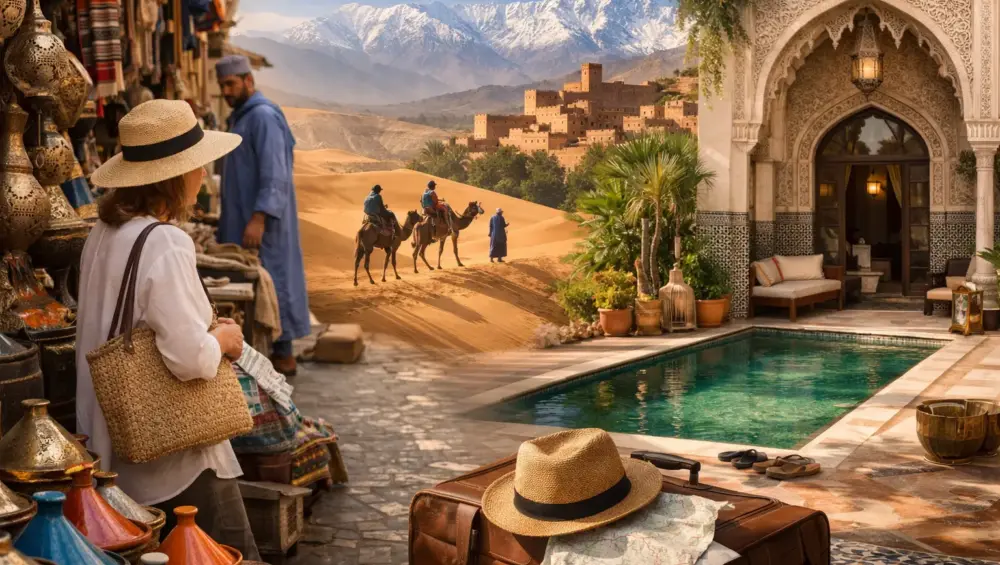
A beautiful riad courtyard, a sunset camel ride and a table full of tagines can make Morocco look effortless. The reality behind the best holidays is usually good pacing, sensible decisions and a little local knowledge. These Morocco travel mistakes to avoid are the ones I see most often when travellers first begin planning – and most are easy to sidestep before you book a thing.
Morocco travel mistakes to avoid before you book
Trying to see the whole country in one week
Morocco is not enormous on a map, but road travel takes longer than many people expect. Mountain roads twist, city traffic has its own rhythm, and stopping for a proper lunch or a viewpoint is part of the pleasure. A route that looks perfectly reasonable online can become several long days in the car.
The classic temptation is Marrakech, Fes, Chefchaouen, the Sahara, Essaouira and the Atlas Mountains in seven or eight nights. It can be done, technically. It will not feel like a holiday for most people.
I would rather help someone choose three places properly than tick off six places from the back seat. Marrakech and the Atlas Mountains work naturally together. Fes, Chefchaouen and the north can make another lovely chapter. The desert deserves enough time to enjoy the journey there, not merely arrive for dinner and leave at dawn.
Treating the Sahara as an easy overnight add-on
The desert is often the emotional centrepiece of a Morocco trip, and rightly so. But reaching the dunes from Marrakech or Fes is a significant journey. A one-night desert visit usually means long driving days on either side, with very little time to absorb the silence, stars and changing light that made you want to go in the first place.
For many travellers, two nights is the sweet spot: one to arrive, settle in and enjoy the sunset, then a full day with room for a desert walk, a quieter camp experience or time in a nearby village before the next sunset. It depends on your overall timeframe, of course. If you have limited days, I may suggest leaving the Sahara for a future trip rather than squeezing it in badly.
Booking a riad for photographs alone
A dramatic plunge pool and patterned tiles do not tell you whether a riad is right for you. In Marrakech or Fes, the location can change your whole experience. Some beautiful properties are deep inside a maze of lanes, which is wonderfully atmospheric but less convenient if you have young children, limited mobility, large luggage or early departures.
Room size matters too. Traditional riads are converted homes, not purpose-built hotels. A room called a suite may be charming but have steep stairs, low doorways or limited wardrobe space. Ask what the practical layout is, where the vehicle can drop you, whether breakfast is served at a sensible hour for your plans, and how the property feels after dark.
The right riad is personal. A honeymoon couple may prioritise intimacy and a rooftop; a family may value easy access, connecting rooms and a calm courtyard where everyone can reset after the medina.
Underestimating seasonal temperatures
Morocco has more climate variety than its postcard image suggests. It can be intensely hot in Marrakech in summer, sharply cold in the desert after sunset, wet in the north during winter and surprisingly chilly in mountain accommodation. Packing only for the daytime forecast is a common regret.
Layers are more useful than a suitcase full of single-purpose outfits. Bring a warm layer for desert evenings and the Atlas Mountains, comfortable shoes with grip for uneven medina streets, and modest, breathable clothing that keeps you comfortable in busy towns and rural communities. A scarf is useful for sun, wind and cooler evenings, rather than a costume accessory bought in a hurry.
On-the-ground Morocco travel mistakes to avoid
Assuming every journey starts at the advertised driving time
A route plan should include the real-world bits: collecting bags, meeting your driver, coffee stops, photos, roadworks, lunch and the simple fact that Morocco is worth stopping for. The stretch from Ait Ben Haddou towards the desert, for example, is not a transfer to rush through. Valleys, kasbahs, date palms and changing geology are part of the experience.
This is why I favour private journeys with breathing space. You do not need an empty schedule, but you do need an itinerary that can absorb life. If a local guide recommends ten extra minutes for a viewpoint or a market is unexpectedly lively, the day should have room for it.
Carrying no cash, or carrying it all in one place
Cards are increasingly useful in larger hotels, restaurants and shops, but cash still makes daily travel easier. Small purchases, tips, market snacks and some rural stops are often simplest in Moroccan dirhams. Keep a mixture of smaller notes and do not rely on finding a cash machine precisely when you need one.
The opposite mistake is stuffing every note into one wallet. Split cash between a secure bag, your main luggage and a separate place on your person. It is mundane advice, but it prevents one careless moment from becoming an irritating interruption.
Feeling you must buy because someone was friendly
Moroccan hospitality is real, and so is commerce in popular medinas. You may be invited for mint tea, shown beautiful craftsmanship or offered help finding a lane. Enjoy the conversation, but be clear with yourself about whether you want to shop.
A polite no is enough. If you do want something, take your time, compare quality and ask questions about how it was made. Bargaining is part of the culture in many places, but it need not become a battle. Agree on a price you are genuinely happy to pay, smile, and move on. The best purchase is one you will enjoy at home, not one you made because you felt cornered in the moment.
Skipping a licenced local guide in the medinas
You can absolutely wander Marrakech or Fes independently, and I encourage some unplanned wandering. But assuming a guide is unnecessary can mean missing the layers that make these cities compelling: the old caravan routes, working fondouks, neighbourhood ovens, artisan traditions and architectural details hidden behind an ordinary doorway.
A good licenced guide is not there to march you from landmark to landmark. They help you understand what you are seeing, adapt the walk to your interests and remove the small navigational friction that can wear down a first visit. I usually recommend a private guide for at least one focused half-day, then free time afterwards. You get context without sacrificing discovery.
Eating only in hotel restaurants
Hotel dining is sometimes exactly what you want after a long drive, especially with children or after a late arrival. But limiting yourself to it is a missed opportunity. Morocco rewards curiosity at the table: a neighbourhood breakfast, slow-cooked tanjia in Marrakech, grilled fish by the Atlantic, a mountain lunch with local bread, olives and seasonal vegetables.
Use common sense rather than fear. Choose places that are busy at sensible meal times, order dishes that are cooked fresh and tell your host about allergies or dietary requirements in advance. I also suggest avoiding an overambitious first meal on the night you land. Let your stomach and your appetite settle into the country together.
Planning every minute of Marrakech
Marrakech has a way of filling a day before you notice. The call to prayer, scooters in the lanes, rooftop tea, a museum you did not expect to like, a hammam, a long lunch in the shade – all of it takes time. Travellers who schedule three museums, two souks, a cooking class and dinner across town often end the day exhausted rather than enchanted.
Choose one or two anchor experiences per day and leave the rest loose. If your priority is design and food, structure the day differently from someone interested in history, gardens or family-friendly activities. The city is intense by nature; your itinerary does not need to be.
Forgetting that comfort means different things on different days
Many people tell me they want an authentic trip, which is a good starting point, but authenticity is not measured by discomfort. A night in a desert camp can be memorable precisely because it is different from your riad in Fes. Yet a difficult camp transfer, a very basic bathroom or a long trek is not automatically the right choice for every traveller.
Be honest about your non-negotiables. Perhaps you want boutique character but reliable heating in winter. Perhaps your group needs shorter walking distances, or perhaps you would happily trade a larger room for a remote mountain view. There is no prize for copying someone else’s version of Morocco. A well-designed journey matches the experience to the person.
Leaving the final days to chance
The last night before an international flight is not the moment to gamble on a lengthy cross-country drive. Morocco’s distances, weather and road conditions deserve a little buffer, especially after a desert or mountain section. Staying within easy reach of your departure airport can turn the end of the holiday into a relaxed final evening rather than a clock-watching exercise.
This is also where thoughtful coordination earns its keep. At Morocco Genie, I design routes around the experiences people want, but I also look carefully at the joins between them: arrival timing, luggage, meal stops, guide schedules and where a slower morning is worth far more than another sightseeing stop.
Morocco does not ask you to plan perfectly, habibi. It simply rewards travellers who leave room for the country to surprise them. Start with what you truly want to feel and do, make peace with leaving a few pins off the map, and let the journey have a little space to breathe.