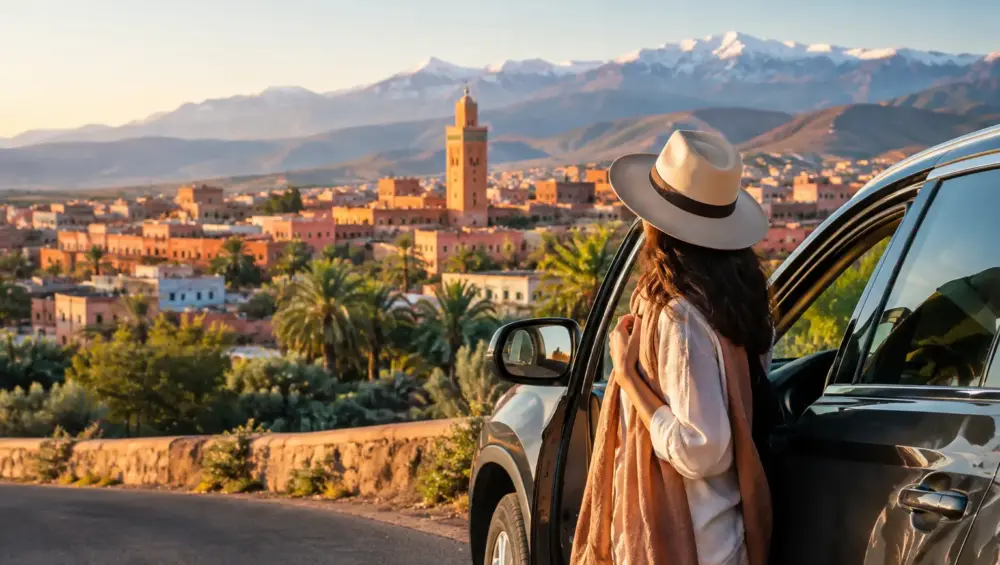
A Moroccan itinerary can look wonderfully simple on a map: Marrakech, desert, Fes, perhaps Chefchaouen and the coast. Then comes the question that changes the whole rhythm of the trip: how will you actually get between them? Morocco transfers are not merely a way of moving luggage from one hotel to the next. They determine how rushed, comfortable and enjoyable the journey feels.
I have found that travellers often put enormous thought into riads and desert camps, then treat the road days as a practical detail to sort out later. That is backwards. Some of Morocco’s finest moments happen between destinations: a tea stop in the Atlas Mountains, a roadside view over the Dades Valley, or the first sight of ochre kasbahs after leaving Marrakech behind. The right transfer turns those miles into part of the holiday.
Why Morocco transfers deserve proper planning
Morocco is bigger than many first-time visitors expect, and roads do not always behave like the straight lines shown on a phone screen. A route may cross mountain passes, pass through villages, or slow down behind local traffic. Distances that appear manageable can become long days if the route has not been planned around real driving conditions and sensible breaks.
For this reason, I nearly always encourage private travellers to think in terms of journey days rather than transfer times. Marrakech to the desert, for example, is not a quick hop. It is a substantial and visually rewarding drive through the High Atlas and towards the south-east. Trying to squeeze it between a late breakfast and an evening activity is a recipe for seeing the windscreen more than Morocco.
A well-planned route also protects the parts of a trip people care about most. If you want an unhurried morning in a Fes riad, a long lunch by the sea in Essaouira, or a sunset camel ride near Erg Chebbi, the collection time and road plan need to support that wish. Your wish is my command is a lovely sentiment, but it still has to account for the mountain road.
Private driver, train or self-drive?
There is no single right answer. It depends on your route, confidence, group size and appetite for logistics.
Morocco’s train network is useful on selected city-to-city routes, particularly between major northern and central cities. It can be an enjoyable choice when you are travelling light and your accommodation is close enough to the station. But trains do not solve the full journey: you may still need a taxi at either end, and they do not reach the Atlas Mountains, desert regions or many rural stops that make a tailor-made itinerary special.
Self-driving gives independence, and some travellers genuinely enjoy it. The trade-off is that the driver also becomes the navigator, parking organiser, fuel planner and person responsible for arriving before a riad’s difficult-to-find entrance becomes frustrating after dark. Driving in busy city centres is very different from driving a quiet country road at home. For a short route focused on open roads, it can work well. For a multi-stop first visit, many people prefer to leave that responsibility behind.
A private driver is usually the most flexible option for a journey that combines cities, mountains, valleys and the desert. You travel at your own pace, stop when a view deserves more than thirty seconds, and avoid the repeated question of how to find the next taxi. It is particularly practical for families, friends sharing a vehicle, travellers with larger luggage, and anyone whose time in Morocco is limited.
One point worth understanding: a professional private driver and a licensed city guide have different roles. Your driver knows the roads, timings and practical flow of the journey. A licensed guide can bring depth to a medina, historical site or local craft tradition. On a thoughtfully designed trip, these roles complement each other rather than compete.
The transfers that need the most care
Airport collection is often underestimated. After a flight, few people want to negotiate transport, withdraw cash, decipher local meeting points and locate a riad in a maze-like old town. An arranged collection makes the first hour calmer, especially in Marrakech or Fes, where vehicles cannot always reach the door of the accommodation.
In these cases, the final section may involve a short walk with a member of the riad team or a local porter. This is normal and often part of staying in the most atmospheric corners of the medina. What matters is knowing it in advance, rather than believing the driver has mysteriously disappeared with your suitcases.
Desert transfers require equally careful judgement. A route to Merzouga or the Erg Chebbi dunes is often one of the longest drives on a Morocco itinerary. I prefer to build in a worthwhile overnight stop when the overall route allows it, rather than treating the desert as an endurance test. Ouarzazate, Skoura, the Dades Valley and the Todra area can all make excellent pauses, depending on the direction of travel and what you want to see.
Mountain roads are another case where timing matters more than speed. The High Atlas can be glorious in clear weather, but conditions and travel times can vary seasonally. Departing with daylight, allowing room for stops, and keeping the day’s ambitions realistic makes a meaningful difference. A transfer plan should be adaptable, not a timetable carved into stone.
How to make a road day feel like part of the holiday
The best journeys have a purpose beyond reaching the next bed. Before arranging a transfer, I ask travellers what they enjoy. A keen photographer may want an early departure for changing mountain light. A family may value a shorter drive with space for food, toilets and a stretch of the legs. Food lovers might enjoy a planned lunch in a small town rather than a hurried stop at the nearest roadside café.
It also helps to be honest about your travel style. Some people love a full day with viewpoints, kasbahs and a few detours. Others want one beautiful stop, a long lunch and time to settle into their hotel before dinner. Neither approach is better. The mistake is choosing a packed route when what you really want is breathing room.
Luggage deserves a small mention too. If you are travelling with several large cases, pushchairs or photography equipment, say so at the planning stage. The most suitable vehicle is not always the smallest or cheapest one. Comfort on a six-hour drive is affected by legroom, boot space, air conditioning and the simple ability to reach your day bag without unpacking half the vehicle.
For longer journeys, carry water, sun protection and a light layer. Morocco can offer strong sun outside and a surprisingly cool vehicle or mountain stop. If anyone in your party is prone to motion sickness, mention it before mountain routes are finalised. A front-facing seat, regular pauses and a less ambitious driving day can be more helpful than bravely hoping for the best.
Questions I would ask before confirming a transfer
The useful questions are not only about departure time. Ask whether the quoted journey includes stops, whether the driver will wait if you are delayed at the airport, and how hotel access works in pedestrian medinas. Confirm the luggage capacity, especially for a group, and clarify whether the plan is a direct transfer or a sightseeing day with driving.
I would also ask who to contact if plans change. Flights can be delayed, weather can affect a route, and a traveller may wake up wanting an extra hour by the pool. Good coordination is not about pretending these things never happen. It is about having someone who can respond sensibly when they do.
When I arrange travel through Morocco Genie, I treat every road section as part of the wider design of the trip. The vehicle, driver, collection point and route must fit the accommodation, activities and pace around them. A spectacular desert camp is less appealing if the day before it has left everyone exhausted.
Leave room for Morocco to interrupt the plan
Morocco rewards travellers who allow a little flexibility. You may want to stop because a market is in full swing, because a valley looks especially beautiful after rain, or because your driver knows a small place serving excellent tagine. Not every pause needs to become an itinerary item.
So plan your Morocco transfers carefully, but do not plan them so tightly that there is no room for surprise. The road is often where Morocco starts telling its best stories, habibi.