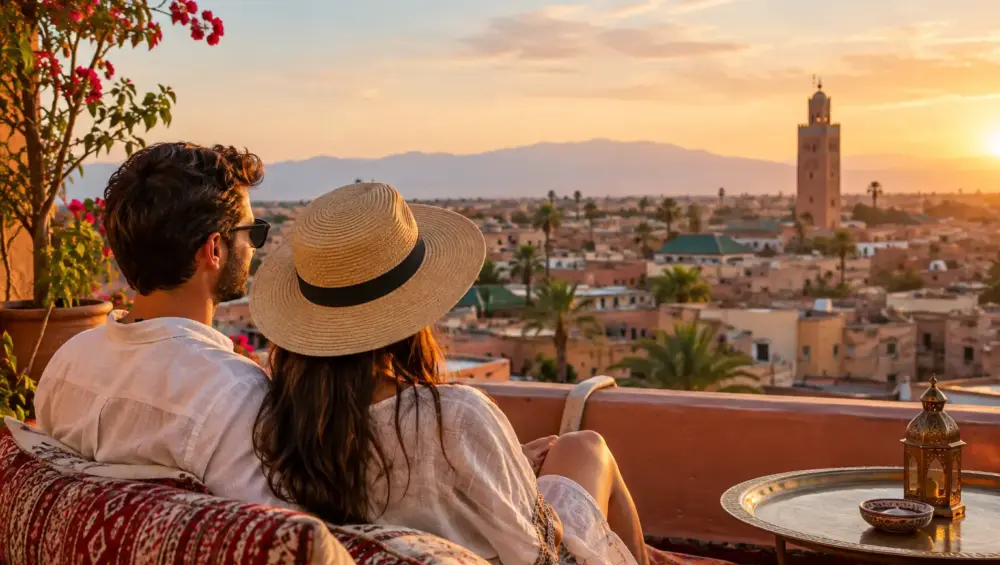
A good Morocco couples holiday is not about squeezing in every famous name on the map. It is about giving each place enough room to work its magic: mint tea on a riad roof after the medina quietens, a long lunch beside the Atlantic, a desert night with no need to check the time. In this Morocco couples holiday guide, I want to help you plan for those moments rather than merely collect destinations.
I have planned journeys for couples who wanted romance, food, photography, hiking, design, surf, or simply a proper break together. The best itineraries are rarely the busiest. Morocco rewards curiosity, but it also rewards a sensible pace.
Start with the kind of time you want together
Before choosing hotels or pinning cities, decide what you want the holiday to feel like. This sounds obvious, but it prevents one of the most common planning problems: one person imagines lazy riad mornings and hammam time, while the other is quietly building a 1,500-kilometre road trip.
For a first visit, I usually suggest choosing two or three contrasting settings. Marrakech brings colour, energy and excellent food. The Atlas Mountains offer fresh air, village walks and a welcome stillness. The Sahara creates the big, cinematic moment. Essaouira is ideal for couples who prefer sea air, seafood and an easy-going rhythm.
You do not need all four. A week split between Marrakech, the mountains and the coast can feel far more restorative than trying to add Fes, Chefchaouen and the desert because they look tempting online. They are tempting, habibi, but Morocco is larger than it appears on a screen.
Choose a route that leaves space for each other
For seven nights: keep the radius tight
A seven-night break works well with three nights in Marrakech, two in the Atlas foothills and two in Essaouira. It gives you urban atmosphere, rural scenery and coast without turning the holiday into a moving operation. This is particularly good for couples travelling in spring or autumn, when all three areas are comfortable.
Another strong option is Marrakech followed by a three-night desert loop. The journey through the High Atlas and south-eastern valleys is spectacular, but it involves long driving days. I would only recommend it if the desert is genuinely important to you. Going all that way for one rushed night can feel more like an achievement than a holiday.
For 10 to 12 nights: make room for the desert or the north
With more time, Marrakech, the Atlas Mountains and the Sahara can be connected at a civilised pace, with a stop in the Skoura area or around the Dadès Valley. Couples who value landscapes often love this route because the scenery changes constantly: red earth, kasbahs, palms, rock formations and then the open dunes.
Alternatively, combine Marrakech with Fes and the north. Fes is rewarding for couples interested in craft, history and food, while Chefchaouen offers blue lanes and mountain views. I would not describe Chefchaouen as a secret escape – it is widely photographed for good reason – but an overnight stay lets you enjoy it before day visitors arrive and after they leave.
The right route depends on your tolerance for driving. A private driver changes the experience dramatically because you can look out of the window, stop for a view or take a proper lunch, rather than concentrating on unfamiliar roads. Still, no amount of comfort makes six hours in a vehicle feel like two. I plan around that reality.
Stay somewhere with atmosphere, not just a good address
For couples, accommodation can shape the whole trip. A beautiful riad in a medina is not simply a place to sleep. It is where you return after the noise outside, take breakfast in a courtyard and have someone point you towards the less obvious dinner spot.
In Marrakech and Fes, I favour riads with character, a calm feel and a location that suits your confidence in the medina. The central lanes are atmospheric, but they can be confusing on arrival, especially with luggage. A good welcome and clear transfer arrangement matter more than a rooftop photographed at sunset.
In the mountains, a room with a valley view is often worth prioritising over elaborate interiors. In the desert, ask what the camp experience actually includes: the privacy of the tent, bathroom arrangements, the camp’s size, and how guests reach it. “Luxury desert camp” is used very loosely. Some feel intimate and carefully run; others are much busier than couples expect.
For the coast, I often encourage at least two nights. Essaouira is not about racing through a list. Walk the ramparts, eat grilled fish by the port, browse without a mission, then accept that the wind may change your beach plans. That is part of its charm.
Plan romantic experiences that are actually enjoyable
The most memorable couples experiences in Morocco tend to be simple, well timed and personal. A private cooking lesson can be wonderful if you enjoy being hands-on, but not if you have spent the previous day navigating a packed souk and would rather sit down. A hammam is deeply Moroccan, yet it is not automatically a couple’s activity – traditional local hammams are generally separate for men and women, while spa-style experiences vary.
I would build in one or two thoughtful experiences rather than scheduling something special every day. Consider a sunset walk in the dunes, lunch at a family-run mountain home, a guided food walk in Marrakech, a pottery visit near Fes, or a relaxed wine-paired dinner where available. The point is not to perform romance. It is to create an occasion you will still talk about at home.
A licensed local guide is especially valuable in Marrakech and Fes. These medinas are richer when someone can explain the details: why a doorway is shaped a certain way, how a workshop operates, where daily life continues beyond the shopfronts. It also means you can stop worrying about directions for a few hours and simply be together.
Talk honestly about comfort, spending and pace
Morocco can be wonderfully good value, but it is not a destination where choosing the cheapest version of every element produces the best trip. A long transfer in an uncomfortable vehicle, a poorly located room or a desert camp that does not match its description can affect the whole experience.
That does not mean every couple needs high-end hotels. It means deciding where comfort matters most to you. Some couples choose a standout riad in Marrakech and simpler, charming stays elsewhere. Others spend more on a private driver and guide, then keep accommodation understated. Both approaches can work beautifully.
I also recommend discussing the practical things before travelling: how much independent wandering you both enjoy, whether early starts are acceptable, and how you feel about bargaining. In the souks, politeness and a light touch go a long way. If shopping is not your shared hobby, set a short window for it and move on to a café or museum. There is no prize for visiting every stall.
Time Morocco for your shared travel style
Spring and autumn are popular because much of the country is pleasant, though popular places can be busy. Winter suits couples who enjoy clear days, cosy riads and quieter streets, but mountain temperatures drop sharply after dark and desert nights can be cold. Summer is excellent on the Atlantic coast, while Marrakech and the south can be intensely hot.
Ramadan can offer a different rhythm, with lively evenings and some adjusted opening hours. It is not a reason to avoid Morocco, but it is worth planning with care, particularly if food schedules and daytime activity are central to your trip.
Let the journey be designed around both of you
The best couples holiday is one where neither person feels they are compromising from morning to night. One day can belong to the food lover, another to the hiker, the photographer or the person who simply wants a long lie-in and a pool. Your wish is my command is a lovely idea, but for couples, the real trick is listening to two wishes.
When I design a private journey through Morocco Genie, I begin there: your pace, your non-negotiables and the moments you would rather avoid. Morocco has grand scenery and famous sights in abundance. Give yourselves enough breathing room, and the smaller moments will become the ones that matter most.