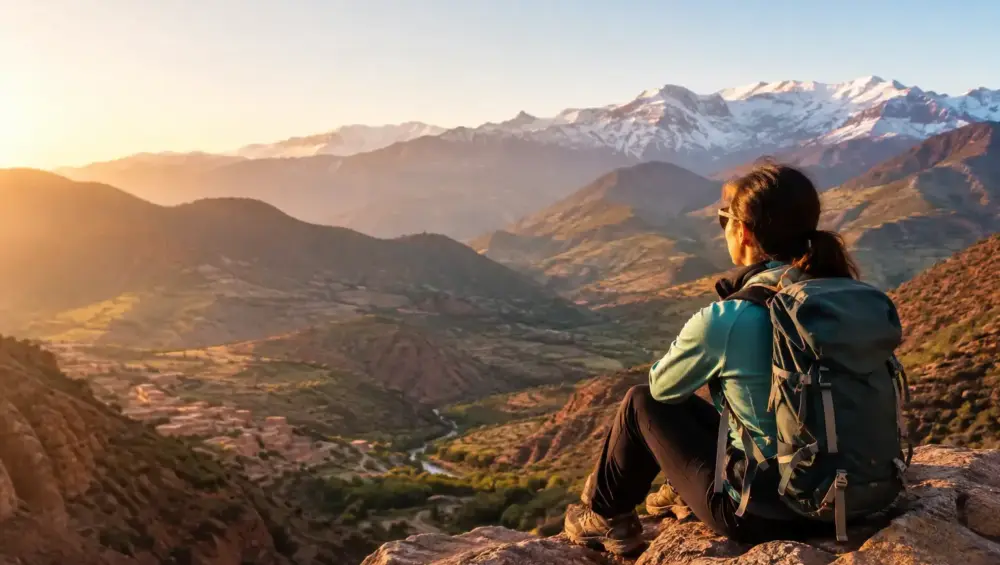
The Atlas is not one neat hiking destination with a single trailhead and a handy sign saying ‘start here’. It is a vast mountain world of Berber villages, high passes, walnut groves, winding roads and weather that can change the character of a walk very quickly. When travellers ask me how to plan Atlas hikes, my first question is rarely ‘how fit are you?’ It is usually: what kind of mountain experience do you actually want?
A demanding summit day, a gentle walk between villages, or two nights in the mountains with time to sit on a terrace and watch the light move across the valley are very different holidays. All can be excellent. Trouble starts when they are squeezed into the same itinerary as though the Atlas were a day trip from Marrakech with a few extra steps.
Start with the right part of the Atlas
For many first-time visitors, the High Atlas south of Marrakech is the natural choice. It is accessible, dramatically beautiful and offers the best range of walking styles. The Imlil area is well known because it is the gateway to Mount Toubkal, North Africa’s highest peak. But Imlil is not only for people chasing a summit. Nearby valleys and villages can suit walkers who want a half-day or full-day hike without turning their holiday into an expedition.
The Ourika Valley is closer to Marrakech and works well for a lighter introduction to the mountains. It is greener in parts, particularly in spring, and the journey is shorter. That convenience comes with a trade-off: popular sections can feel busier, especially at weekends and during school holidays.
I also often look beyond the obvious. The Ait Bouguemez Valley, sometimes called the Happy Valley, rewards travellers who can give it more time. It has a calmer, more remote feel, broad views and excellent village-based walks. Getting there takes longer, which is exactly why it should not be treated as an overnight detour.
The best region depends on your route. If you have a few days after Marrakech, Imlil may be ideal. If the mountains are a central reason for coming to Morocco, a slower stay in Ait Bouguemez or another quieter valley can be far more memorable.
How to plan Atlas hikes around your actual pace
A map can be misleading in the Atlas. A route that appears short may include sustained climbing, loose stones, narrow mule paths or a steep descent that tests the knees more than the ascent tested the lungs. Elevation and terrain matter at least as much as kilometres.
I suggest being honest about what a good walking day means to you. For some travellers, that is four to six hours with proper stops, a picnic and a village tea. For others, it is a short morning walk followed by a relaxed lunch and a hammam back in Marrakech. Neither choice is less authentic. The mountains are not a fitness exam, habibi.
Leave room for the road as well. Even when a mountain journey looks modest on paper, bends, village traffic and photo stops add time. If you arrive in the afternoon, do not plan a major hike immediately. Settle in, take a gentle stroll and let the altitude do its quiet work. The following day will feel much better.
For travellers combining Marrakech, the desert, Fes and the mountains in one trip, I usually recommend choosing one or two purposeful hikes rather than trying to walk every day. Morocco is full of experiences worth lingering over. A rushed three-hour drive, a hurried ascent and a late check-in does not make a richer itinerary.
Choose the season before choosing the route
Spring and autumn are often the most comfortable times for Atlas walking. From roughly April to May, valleys can be green and wildflowers appear, while September to November usually brings clearer days and pleasant walking temperatures. Conditions vary by altitude, of course. A warm Marrakech morning does not mean a warm pass above the valley.
Summer hiking can work well if you begin early, choose sensible elevations and avoid treating the hottest part of the day as a challenge. Lower valley walks can be very hot, while higher routes may remain enjoyable. Winter is a different proposition. Snow, ice and cold nights can affect access and make routes more technical. Toubkal and high-altitude trekking require particularly careful judgement in winter, with appropriate equipment and experienced local support.
Mountain weather deserves humility at every time of year. Afternoon cloud, rain or wind can arrive quickly. A flexible plan is not a lack of planning. It is good planning.
Toubkal is not the default answer
Mount Toubkal has real appeal, and reaching its summit is a meaningful achievement for capable, well-prepared hikers. Yet it is not automatically the best Atlas experience for every traveller. The standard ascent requires stamina, altitude awareness, suitable equipment and time for acclimatisation. It also means a relatively early start and a more functional mountain-refuge experience than many people expect.
If your priority is village life, scenic trails and comfortable accommodation, a lower-level itinerary may suit you better. I would rather help someone enjoy two beautiful days around the valleys than persuade them into a summit attempt they secretly dread.
A local guide changes more than navigation
On established paths, it can be tempting to think a guide is optional. But in the Atlas, a good licensed local guide offers far more than directions. They understand the terrain, adjust a route to the day’s conditions, explain village customs and can turn what looks like a collection of stone houses into a living story of family, farming, water and mountain life.
There is also a practical side. Trail markings are not consistent, paths can split, and weather can reduce visibility. For remote walks, high routes or anyone unfamiliar with mountain travel, a guide brings reassurance without making the day feel over-managed.
The quality of the match matters. Some travellers want a brisk, focused walking pace; others enjoy stopping to photograph every terrace and ask questions. When I arrange hiking days through Morocco Genie, I try to establish that rhythm in advance. Your guide should complement the holiday you want, not drag it in a different direction.
Pack for changing conditions, not for a fashion shoot
You do not need specialist expedition kit for every Atlas walk, but trainers with worn soles are a poor gamble on rocky ground. Proper walking shoes or boots with grip make descents safer and more comfortable. Layers are more useful than one heavy item, because mornings can be cool and afternoons surprisingly warm.
A small daypack should hold water, sun protection, a light waterproof layer, snacks and any personal medication. Sunglasses and a hat matter even when the air feels cool. Walking poles are worth considering if you are uneasy on downhill terrain or have sensitive knees.
Do not assume you can buy exactly what you need once you reach a small mountain village. Bring essential personal gear from home, then enjoy the freedom of travelling light rather than hunting for basics.
Build the mountain stay into the experience
An Atlas hike becomes more satisfying when the overnight stop is part of the plan. A mountain guesthouse may be simple compared with a Marrakech riad, but that is often the point. You might wake to the sound of roosters, see women carrying bread to an oven, or watch mules moving along a path below the terrace.
Comfort varies considerably, so this is where expectations matter. Some travellers will be delighted by a characterful family-run lodge with modest rooms; others need stronger heating, private bathrooms or a more polished level of service. Tell your planner what helps you rest well. There is no prize for pretending you enjoy a cold room after a long walk.
Meals are usually generous and simple: soup, salads, tagines, fresh bread and fruit in season. If you have dietary requirements, raise them early. Mountain kitchens can often accommodate them with notice, but improvising at the table is not the kindest approach for anyone.
Give the Atlas enough space on your Morocco route
One night in the mountains can provide a welcome contrast to Marrakech, but two nights usually transform the experience. You gain a full hiking day, avoid packing again immediately and have time for the small moments people remember: morning tea with a view, an unplanned village walk, or simply an early night beneath a very dark sky.
For a private Morocco journey, the smartest route is often not the one that ticks the most famous places. It is the one that lets each place breathe. The Atlas is particularly good at reminding us of that.
If you leave the mountains with dusty boots, tired legs and the feeling that you have seen Morocco at a more human pace, you planned it well. Your wish is my command, but in the Atlas, I will always recommend asking for one extra night.