A mint tea poured in a busy Marrakech shop can be lovely. It is not, by itself, one of the authentic experiences in Morocco that travellers remember years later. The moments that stay with you usually have more context: meeting the person behind a craft, taking the slower road because the landscape is the point, or sharing a meal where you understand a little of the life around the table.
After years of planning private journeys here, I have learned that authenticity is not a box to tick. Morocco is full of beautiful, photogenic experiences, but the best ones suit the traveller, the season and the route. A family with young children may find their most meaningful day in a relaxed mountain village. A couple keen on food may prefer an unhurried morning market visit and a home-style cooking experience over another grand monument. Your wish is my command, habibi – but a good plan also needs honest choices.
What makes an experience genuinely Moroccan?
I do not judge an experience by whether it is famous, remote or completely untouched by visitors. Morocco’s great sites are famous for a reason. Walking through Fes with a knowledgeable local guide, watching artisans work in a traditional workshop, or spending a night among the dunes can feel deeply authentic even when other travellers are nearby.
For me, the difference lies in three things: connection, timing and care. Connection means you are not merely watching a performance designed for a quick photograph. Timing means avoiding the most rushed part of the day where possible. Care means the activity respects the people, homes, landscapes and working traditions that make it worthwhile.
It also helps to be realistic. Not every local encounter needs to become an intense cultural exchange, and not every small village is a hidden secret. Moroccans are famously hospitable, but they are not scenery. A respectful guide, a little curiosity and a willingness to listen go much further than chasing the word “authentic”.
Authentic experiences in Morocco begin with the route
Many travellers try to add an “authentic day” to an itinerary already packed with Marrakech, Fes, Chefchaouen, the Sahara and the coast. The result can be a beautiful holiday spent mostly checking into and out of places.
A better approach is to build breathing room into the route. Morocco looks manageable on a map, but a mountain road, a medina transfer or a long desert drive changes the rhythm. I would rather give a traveller two full nights in the Dades Valley, with time for a village walk and a relaxed dinner, than send them through it as a windscreen view between Marrakech and the desert.
The same is true in cities. Fes rewards patience. Its medina is not a place to conquer with a list of twenty stops. A private guide can help you understand its neighbourhoods, craft traditions and food culture while steering the day towards your interests. If you love architecture, focus there. If you care more about daily life and cooking, the route should reflect that.
Choose one strong local thread
The most satisfying journeys often have a thread running through them. It might be Moroccan food, Amazigh culture, traditional crafts, music, gardens, photography or landscapes. That thread gives decisions purpose.
For example, someone interested in craft might pair the workshops and souks of Fes with a quieter pottery area near Safi or a visit arranged around artisans in the Atlas region. A traveller interested in food might combine a market-focused day in Marrakech, regional dishes in the mountains and fresh seafood on the Essaouira coast. These are not random activities placed between hotel nights. They become a way of reading the country.
Eat where the story is as good as the meal
Food is one of the easiest ways to feel close to Morocco, but it is also easy to reduce it to a tagine checklist. Tagines are excellent, of course, but Moroccan cooking changes markedly by region and household.
In Marrakech, a food walk can make the medina less intimidating and more delicious, particularly if you want help understanding what is being cooked around you. In Fes, I encourage travellers to look beyond restaurant menus and ask about dishes with local roots, such as pastilla or the city’s particular approach to sweets and bread. By the Atlantic, grilled fish is often the obvious choice, but the pleasure is in choosing a simple place with the day’s catch rather than seeking a polished version of the same meal.
A cooking experience is worth doing when it includes more than recipes. Shopping for ingredients, learning why preserved lemon or ras el hanout is used in a particular way, and sitting down without a rush make a difference. It depends on your interests, though. If cooking feels like homework on holiday, a guided tasting or a leisurely lunch may be a better fit.
Let crafts be more than souvenirs
Morocco’s craft traditions are everywhere: zellige tilework, leather, weaving, metalwork, wood carving and pottery. The challenge is seeing the work without feeling pressured to buy something.
A good visit allows time to watch, ask questions and leave comfortably if nothing is right for you. I particularly value experiences where travellers can see the stages behind an object: clay prepared before a pot is shaped, wool turned into a rug, tiny pieces cut for mosaic. You notice the skill differently once you understand the labour involved.
There is a practical lesson here too. Prices, quality and provenance vary widely. If you hope to buy a significant piece, do not make the decision at the end of an exhausting day in the souk. Give yourself time, know how you will transport it, and choose something you genuinely want to live with at home. A small handwoven basket with a clear memory behind it can be more meaningful than a large purchase made under pressure.
Find quiet in the mountains and desert
The Atlas Mountains offer some of Morocco’s most grounded encounters, especially for travellers who need a break from city energy. A gentle walk between villages, tea with a local family where appropriate, or simply a long lunch overlooking terraced fields can reveal a different pace of life.
But mountain travel needs sensible planning. In winter, higher routes can be cold and conditions may affect access. In summer, lower valleys can be very hot. The right choice might be a short, scenic walk rather than an ambitious trek, particularly if your holiday is otherwise full of driving. A local mountain guide adds context as well as reassurance, helping you understand the landscape, agriculture and village customs without treating communities as an attraction.
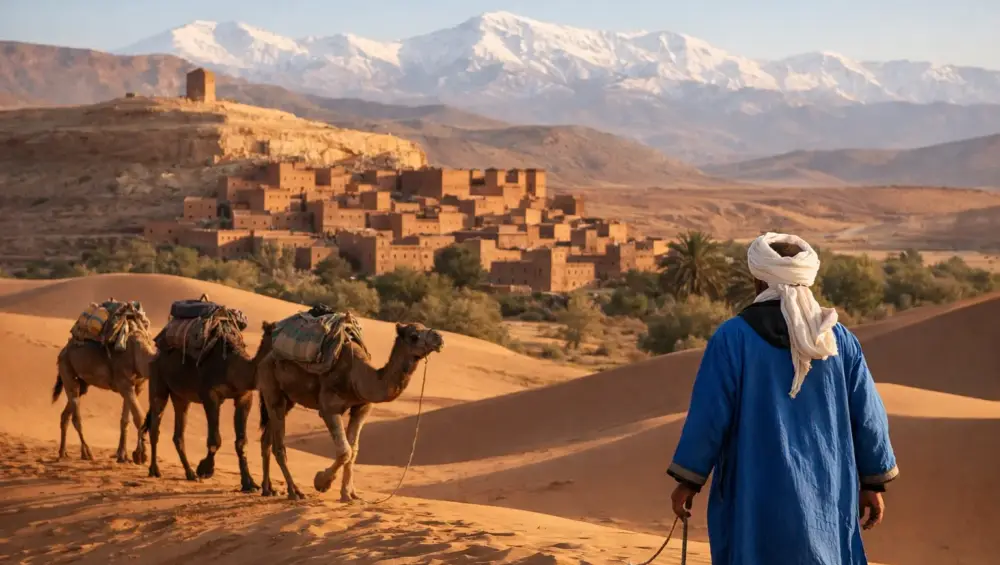
The Sahara has a similar trade-off. The dunes near Merzouga are extraordinary, especially in soft morning or late-afternoon light. Yet a desert stay should not be chosen solely for a dramatic tent photograph. Consider the driving time, the level of comfort you want and how much quiet you actually value. Some travellers love a simple camp and a long walk on the sand. Others prefer a comfortable base, an early sunrise and less time on the road.
One detail I always mention: the desert is not silent every minute. There may be wind, other camps and the practical sounds of hospitality. The experience becomes more rewarding when you arrive open to the real place rather than a fantasy of total isolation.
Use local guides for understanding, not just navigation
A strong local guide changes a place from a backdrop into a story. This matters most in the medinas of Marrakech and Fes, where getting lost can be fun for an hour but tiring when you are trying to find a particular workshop, lunch reservation or historic site.
The best guides adapt. Some travellers want dates, dynasties and architectural detail. Others want to know how a neighbourhood functions, what people eat during a normal week, or why certain doors and fountains matter. Tell your guide what you are curious about at the start of the day. You will get a far better experience than if you quietly follow a standard route.
Private travel has an advantage here. You can slow down when a subject catches your attention, skip what does not, and leave space for the unplanned moments: a bread oven warming a lane, a conversation with a shopkeeper, rain turning the medina stones glossy underfoot.
Leave room for the Morocco you did not schedule
Careful planning does not mean controlling every hour. It means arranging the important pieces well enough that you can be present for the rest. This is where Morocco Genie’s tailored approach matters: the right driver, guide, accommodation and route create a framework, while still leaving space to change a lunch plan, linger over tea or stop when the light across a valley is too good to ignore.
My advice is simple: choose fewer experiences, ask better questions and give each place enough time to answer. Morocco is generous with impressions, but the ones that feel real rarely arrive on command.