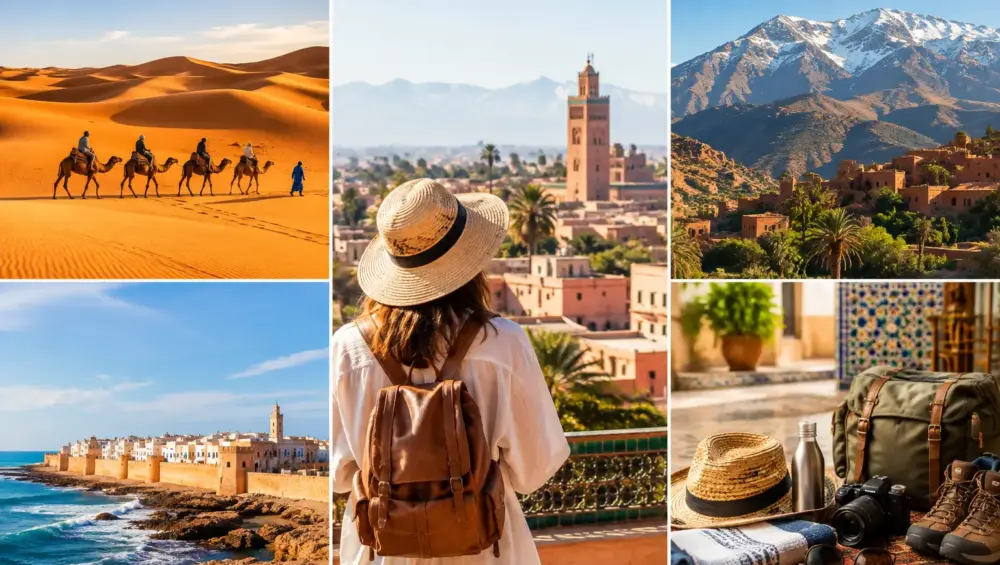
A traveller can leave Marrakech in warm sunshine, stop for lunch in the High Atlas wearing a fleece, and reach the Sahara before sunset with a coat close at hand. That is Morocco weather in one day: wonderfully varied, occasionally surprising, and very relevant to how I design a route.
The question is not simply, “What is the weather like in Morocco?” It is where you are going, how long you have, and whether your ideal holiday means wandering medinas, hiking mountain paths, swimming, or sleeping beneath desert skies. Morocco is not one climate. It is several, packed into a country that can look deceptively compact on a map.
Morocco weather: the big picture
Morocco has a broadly Mediterranean climate along much of the north and coast, a more continental feel inland, proper alpine conditions in the higher mountains, and a dry desert climate in the south-east. Temperatures can be dramatically different between regions on the same date.
The Atlantic coast, including Essaouira, Casablanca and Rabat, is usually moderated by ocean breezes. Marrakech is hotter and drier, especially from late spring through early autumn. Fes can feel surprisingly cold in winter and very hot in summer. In the Atlas Mountains, elevation changes everything, while the Sahara brings hot days, chilly nights and the occasional windstorm.
This is why a forecast for Marrakech should not dictate what you pack for a Marrakech, Atlas and desert itinerary. I often see visitors arrive prepared for a hot city break, then discover that their desert camp evening or mountain lodge breakfast calls for an extra layer. Habibi, welcome to Morocco.
Spring and autumn: the easiest all-round seasons
For many travellers, April, May, October and November offer the most forgiving balance. Days are generally pleasant for sightseeing, driving days feel easier, and the mountains and desert are more comfortable than at the height of summer. These months work particularly well for a first trip combining Marrakech, Fes, the Atlas, the Sahara and the coast.
Spring has a special advantage in the countryside. The landscape can look greener after winter rain, valleys are full of blossom, and hiking conditions are often excellent. The trade-off is that weather can be less settled, especially in March and April. A bright morning can become a wet afternoon in the north or mountains, so I would not build a tightly timed outdoor plan around perfect sunshine.
Autumn is often my favourite period for a varied private journey. The intense summer heat begins to ease, yet days remain warm enough for long lunches, rooftop terraces and coastal walks. October can still be properly hot in Marrakech and around the desert, while November brings cooler evenings and a greater chance of rain in northern cities. Both are excellent, but they suit slightly different preferences.
Summer in Morocco: choose your route carefully
June to August can be brilliant if you choose the right places. It is not automatically a season to avoid, but I would be honest about the compromises. Marrakech, the Dades Valley and the Sahara can become extremely hot, especially in July and August. Exploring a medina at midday or taking a long desert walk then is not everybody’s idea of a holiday.
For a summer trip, I often lean towards the Atlantic coast and higher elevations. Essaouira is notably breezy and can feel far more comfortable than inland Morocco, although that wind is exactly why it attracts watersports enthusiasts and why a light layer is useful even in summer. Tangier, Asilah and the Rif region can also work well, though popular coastal areas are naturally busier during school holidays.
The Atlas Mountains offer relief, but do not assume every mountain village is cool at every hour. High routes and evenings are pleasant, while lower valleys can still be hot in the afternoon. The sensible rhythm is simple: start active days early, pause in the heat, and keep the later afternoon for a gentler walk, a pool or a long meal.
A Sahara overnight is still possible in summer for travellers who genuinely want it, but it needs sensible expectations. The desert is not at its most comfortable then, and I would keep the itinerary unhurried rather than making it a rushed overnight detour from Marrakech.
Winter: clear light, cold nights and quieter streets
From December to February, Morocco can be a lovely choice for travellers who prefer mild daytime temperatures and fewer people around the headline sights. Marrakech often has beautifully sunny days in winter, making it ideal for exploring gardens, souks and historic neighbourhoods. Yet mornings and evenings can be cold, particularly in riads with open courtyards or rooms that are not heavily heated.
Winter is also when the difference between regions becomes most obvious. Snow can fall in the Atlas Mountains, and high passes may occasionally be affected by conditions. Fes, Chefchaouen and the north can be wet and chilly. In the Sahara, daytime sunshine may be glorious, but nighttime temperatures can drop sharply. Desert photographs may show flowing clothes and golden dunes, but a warm jacket after dark is not optional.
That does not make winter a poor choice. It simply makes route design more important. A city-and-culture journey with Marrakech, Fes, Rabat and a few carefully chosen mountain or desert nights can be excellent. For travellers hoping for beach time or high-altitude trekking, I would usually steer the conversation towards another season.
Rain, wind and the details forecasts miss
Rain in Morocco is often misunderstood. Most of the country does not experience endless grey, drizzly weeks in the way Britain can. When rain arrives, it may be short and heavy, particularly in the cooler months. It can affect road conditions in rural areas and make some unpaved routes unsuitable, but it can also leave the air clear and the landscape looking spectacular.
The north and the Rif Mountains receive more rain than Marrakech or the desert. Chefchaouen is especially beautiful in spring, but it is not guaranteed dry simply because Morocco is associated with sunshine. Essaouira’s wind is another detail worth understanding. It is part of the city’s character, welcome in hot weather and less appealing if you had imagined still, sunbathing weather every day.
Sand and dust can occasionally affect the south and desert regions. These conditions are usually temporary, but they are a reminder that outdoor plans should have some flexibility. A well-planned private journey leaves room to adjust a departure time, change the order of a visit, or choose a more sheltered activity without turning the day into a logistical puzzle.
What to pack for Morocco weather
Layering is more useful than packing for a single season. I recommend light, breathable clothes for daytime, one genuinely warm layer for cool evenings, and comfortable closed shoes for medinas, uneven paths and desert terrain. A light waterproof jacket is worthwhile from autumn through spring, particularly if your route includes Fes, Chefchaouen or the mountains.
For summer, bring sun protection you will actually use: a hat, sunglasses and high-factor sun cream. Loose, lightweight clothing is more practical than very short or tight outfits when you are walking through cities in the heat. For winter desert and mountain stays, add a warm jacket, socks for the evening and sleepwear that will not leave you shivering before breakfast.
One small but useful point: riads, kasbahs and mountain properties have different heating, insulation and pool arrangements. Rather than assuming that every beautiful-looking stay feels the same in January or August, I factor the season into accommodation selection. The right room, location and property style can make a larger difference than a few degrees on a weather app.
Let the climate shape the holiday, not spoil it
The best time to visit depends on the Morocco you want. A couple seeking a relaxed blend of cities, food and the desert may love October. A family travelling in August may have a far better time with coast, mountains and shorter sightseeing windows. Keen walkers might choose spring or early autumn, while winter travellers can enjoy striking light and quieter medinas if they pack properly.
When I plan a tailor-made route, weather is not an afterthought. It shapes driving times, hotel choices, activity timing and even how many nights to spend in each place. Give Morocco’s changing climates a little respect, and they become part of the pleasure: mint tea in a sunny winter courtyard, a coastal breeze after Marrakech heat, and a blanket over your shoulders beneath a clear desert sky.